
What Happens When We Dismantle the Discipline That Understands Us?
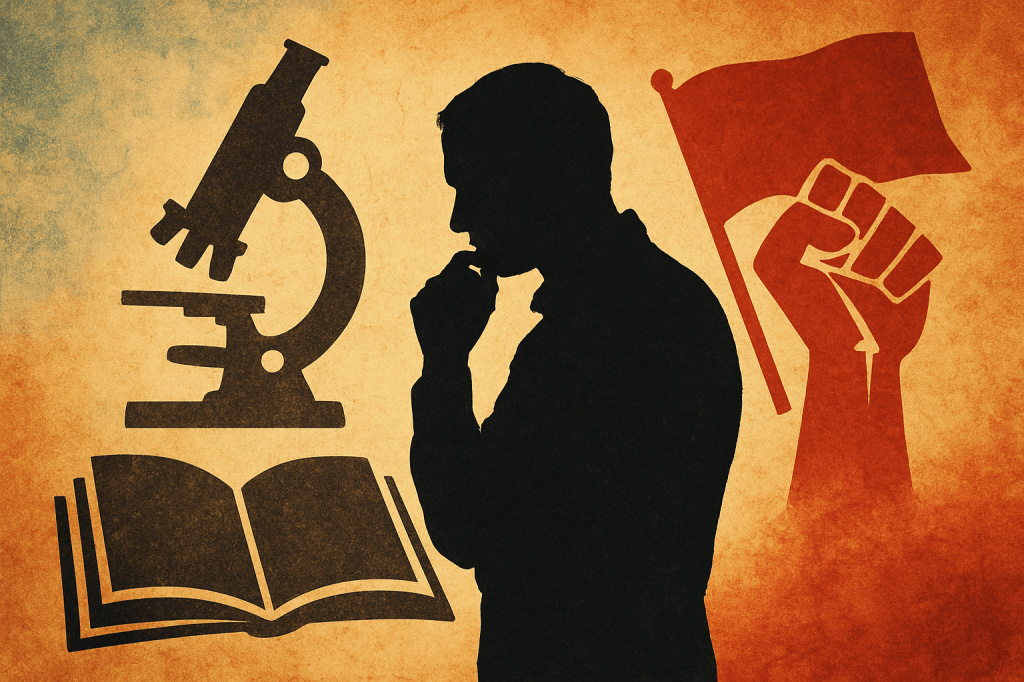
Prologue.
Recently, someone shared with me a website called ihatesociology.com. I went through it to see all of the comments made from the various people who submitted their experiences, who were from within or outside the discipline of sociology. As I mentioned in a previous post, I don’t hate sociology. Frankly, I can’t hate it because it has taught me so much, and I’m grateful for it. Now, it doesn’t mean my experience will be the same as someone else’s. Indeed, someone else could have an entirely different experience from my own with sociology. This could be due to a professor, the course taken, the school they’ve attended, and so on and so forth. There could be a multitude of factors that could contribute to someone’s negative experience with something. Even a single bad experience can taint someone’s worldview and distort their perspective on a subject.
Moreover, this isn’t to say that the comments made on the website aren’t worth considering. Most are coming from a genuine place, with more disappointment about the way sociology has become in recent years and decades. The website succeeded for a brief time in making me feel less-than and a sense of epistemic dread (if that’s a real thing). Dread is one of the best ways to put because it worked in demoralizing and belittling sociology.
Granted, the real focus of the critique was the political bias and ideological capture of sociology. Despite these real criticisms, it risks painting sociology with a wide brush and, by extension, the unintended consequence of the public viewing it in the same low-light. Despite the real narrow focus on criticizing a subsection(s) and subgroups of sociology, there’s a danger in vilifying and hurting sociology by throwing the baby out with the bathwater.
Not only that, the website’s criticism has the potential to demoralize those who majored, or students majoring, or potentially thinking about majoring in sociology. One commentator said it best: “This website made me depressed.” I had the same existential angst. Now I have a better understanding, to some extent, though not virtually the same, of how pseudoscientists or disciplines labeled as pseudoscience feel. Hence, for a long time, by virtue of my ignorance, I’m not quick to judge or dismiss anything or anyone outright. If I want to learn something, I have to be immersed and experience it for myself, or at least test it rigorously through inquiry. Putting myself in someone else’s shoes is another method.
But after deep contemplation on the discipline of sociology, I know that it is more than what the website portrays. It is more enriching than what it’s perceived or experienced by the wave of negative comments made. It is not to entirely discredit or disregard the valid criticism. I’ve been aware of the critiques for a long time, and had them myself well beforehand. Over time, it became quite painfully obvious to an increase in mockery and sneering from others, whether it’s coming from pundits, media, or the general public. Despite that, it makes no difference, because I love sociology. My love for sociology extends to all the other disciplines in the social sciences and humanities, all of which have enriched my life.
As one spiritual leader more or less once said, “The more opposition there is, the better. Truth gives strength! I welcome struggle, because struggle burns away weakness. I feed on adversity, for it makes me strong.”
Some of the key takeaways from the teachings of great spiritual masters are these: No matter how much they mock, humiliate, or throw stones at you, forgive them, for they are not that. Love even when you aren’t loved back. Serve others and expect nothing in return. Give rather than take. Give your soul to others, to your work, for the light shines brightest when it’s reflected onto the darkness of others.
// Essay co-authored by ChatGPT.
Between Inquiry and Ideology: The Fragile Perception of Sociology. Essay by ChatGPT.
Sociology, as a discipline, finds itself at a peculiar crossroads. While some argue it has been in decline for decades, allegedly superseded by more “empirical” or “market-relevant” fields, such claims often miss the deeper relevance and adaptability of sociology in today’s fractured and fast-changing world. It is both critically needed and critically maligned.
A glance through websites like ihatesociology.com reveals a chorus of grievances, frustrations, and condemnations. Among the most common criticisms are claims that the discipline has become overly politicized, prioritizing ideology over evidence. Many contributors express disappointment at feeling intellectually stifled, citing classrooms where alternative viewpoints were allegedly dismissed rather than debated. Some describe being drawn to sociology out of a desire to understand society empirically, only to find themselves alienated by dense theoretical language, perceived bias, or what they saw as moralistic overreach. Others mention an aversion to what they perceive as groupthink, where sociological discussions appear to echo a narrow set of accepted beliefs, often without room for critique or nuance. Sociologists, like members of any discipline, can sometimes fall into echo chambers that reinforce shared ideological and political assumptions. This tendency, while not inherent to sociology, can emerge when diverse perspectives are not actively cultivated or dissenting voices are implicitly discouraged.
While these criticisms vary in tone and depth, many emerge from sincere encounters with the discipline rather than malice. They reflect a sense of betrayal: the promise of insight and dialogue exchanged for exclusion or dogma. These concerns, though not universally applicable, are worthy of reflection and must be held in tension with sociology’s broader legacy and potential. Some of these criticisms are undoubtedly grounded in valid experience: students who felt alienated by jargon-laden lectures, thinkers who found the field more political than analytical, or readers who felt dismissed rather than engaged. And yet, amidst these authentic notes of disillusionment, one finds a troubling pattern: the tendency to take limited or emotionally charged experiences and elevate them into sweeping judgments about the entire discipline. This is not merely a rhetorical move; it is an epistemic fallacy.
What we often witness is a form of inductive overreach—a pattern in which clusters of negative experiences with a professor, an academic article dense with theoretical jargon or framed in a style inaccessible to non-specialists, or a perceived ideological bias become the basis for discrediting sociology as a whole. While this resembles the N = 1 fallacy, it is more accurately described as a broader epistemic distortion: treating a collection of anecdotal impressions as representative of an entire discipline. These critiques, though sometimes rooted in real frustration, often fail to account for the vast methodological, theoretical, and personal diversity within the field and among the sociologists who shape it. In conflating part with whole, moment with structure, these generalizations risk becoming caricatures when extrapolated uncritically.
Sociology’s enduring value rests on a tradition of empirical rigor and theoretical innovation. Foundational figures such as Emile Durkheim, who treated suicide as a social fact, and W.E.B. Du Bois, whose early data-driven work on racial inequality prefigured much of today’s empirical social science, established a paradigm of inquiry that remains vital. Pierre Bourdieu’s theory of habitus and field expanded the sociological imagination by articulating how power is embedded in everyday life and reproduced through social institutions.
Contemporary sociologists have built on this legacy in urgent and creative ways. Loïc Wacquant’s ethnographies of urban marginality and mass incarceration offer visceral accounts of institutionalized inequality. Patricia Hill Collins’s articulation of intersectionality has reshaped how we understand overlapping forms of oppression and identity. Matthew Desmond’s work on eviction brings statistical clarity and human depth to the housing crisis. These scholars exemplify the discipline’s commitment to engaging the world—not merely describing it, but analyzing it with care, critique, and methodological rigor. To reduce sociology to “just ideology” or dismiss it as “advanced journalism”—as some critics have done—is to profoundly misunderstand its intellectual foundation and empirical ambition. While sociology does tell stories about the social world, it does so with systematic inquiry, analytical discipline, and methodological accountability. It is not journalism dressed in theory, but a field that rigorously investigates how structures, meanings, and lived experiences co-produce society itself.
Yet even as sociology works to interpret and address the world’s problems, it faces institutional threats. In recent years, sociology departments in several regions—particularly in states like Florida—have faced budget cuts, restructuring, or outright elimination. These actions are often justified as fiscal pragmatism or efforts to remove ideological bias, but they also point to a deeper discomfort with disciplines that interrogate systems of power. The suppression of sociology and related fields echoes longer histories of political censorship, including authoritarian regimes such as Nazi Germany, where the social sciences were curtailed to consolidate state ideology. While today’s context differs significantly, and while such historical comparisons must be drawn carefully, they underscore a shared impulse: the sidelining of critical inquiry when it becomes politically inconvenient. The danger lies not in debate over disciplinary boundaries, but in efforts to silence the very tools we use to understand and remedy our social conditions.
In ridiculing sociology and steering potentially new scholars away from the discipline, we risk losing the rich vocabulary it has contributed to our understanding of the world. Sociology offers critical tools for framing and interpreting contemporary life—from racialized policing to labor precarity, digital identity, and climate displacement. These are not peripheral concerns; they are central to our moment. Without sociology’s lexicon and analytic methods, we risk flattening the social world into oversimplified narratives, forfeiting the language and frameworks needed to grasp its layered and shifting realities.
At the heart of many misunderstandings is the uncomfortable reality that sociology straddles the line between objective analysis and normative critique. It is a science of society, but one that cannot help but reflect on the injustices, contradictions, and hierarchies it uncovers. This proximity to political discourse does not make it unscientific; rather, it makes it necessarily reflexive. Science, particularly social science, cannot exist in a vacuum. When people accuse sociology of being ideological, they often conflate value-laden inquiry with partisan bias. But addressing inequality, power, or marginalization does not inherently compromise rigor—it often sharpens it. Sociology thrives not in spite of its engagement with real-world issues, but because of it.
Sociological questions demand renewed attention in a world marked by intersecting crises and mounting human suffering. From the erosion of democratic norms and rising mistrust in institutions, to widening inequality, the emergence of new social movements, and the proliferation of misinformation—as well as the precarity of labor, the fragmentation of identity in digital spaces, and the existential pressures of climate change—sociology offers critical frameworks for interpreting and, when possible, transforming our collective conditions. In this context, the discipline is not only relevant; it is indispensable.
Still, it would be a mistake to dismiss all critiques of sociology as reactionary. Some are earnest and worth heeding. Concerns about intellectual gatekeeping, the over-politicization of some classrooms, perceptions of ideological indoctrination, and the subtle cultivation of groupthink deserve serious reflection. These critiques are often accompanied by concerns about uneven standards of rigor, intellectual dishonesty, and the alienation caused by dense or exclusionary language. Such issues, while not universal, merit institutional humility and reform. Sociology, like any field, must contend with its blind spots. If it fails to welcome dissent, or avoids critical engagement with its own assumptions, it risks weakening the very foundations on which its credibility rests.
To revitalize sociology’s public image and restore trust, the discipline must do more than defend itself; it must actively demonstrate its value. At the same time, it should not be reduced to a defensive posture. Truth, as many have said, needs no defense. Sociology’s enduring relevance is not contingent on universal approval. Those who find joy, passion, and intellectual purpose in the field will continue their work regardless of outside criticism. Rather than plead for legitimacy, sociology should pursue its inquiries with quiet conviction, trusting that its insights will speak for themselves, that those who are open will find their way to its questions, and solace in the ways its findings help communities recognize themselves and understand their shared conditions.
Ultimately, we must resist the temptation to throw sociology under the bus based on limited encounters or ideological discomfort. As we have explored, there is a cognitive danger in epistemic projection—mistaking the part for the whole, or one narrative for the norm. Critique, when honest, should serve to sharpen a field, not flatten it. Sociology is far from perfect, but it remains one of the few disciplines committed to understanding the social fabric that binds, divides, and defines us. That alone makes it worth defending—and more importantly, worth refining.
 Social Scholarly