
Prefix
I fed the superior thinking AI machine (ChatGPT) a full transcript, albeit in chunks, to digest and interrogate in depth the claims Chamath Palihapitiya made on the Flagrant podcast concerning the recent President Trump tariff debacle. I’ve already seen many other perspectives by pundits, but this one was different and stood out because it left me thinking of the real goal and motive behind Trump’s recent move. I personally learned a lot from ChatGPT’s insights in this interview.
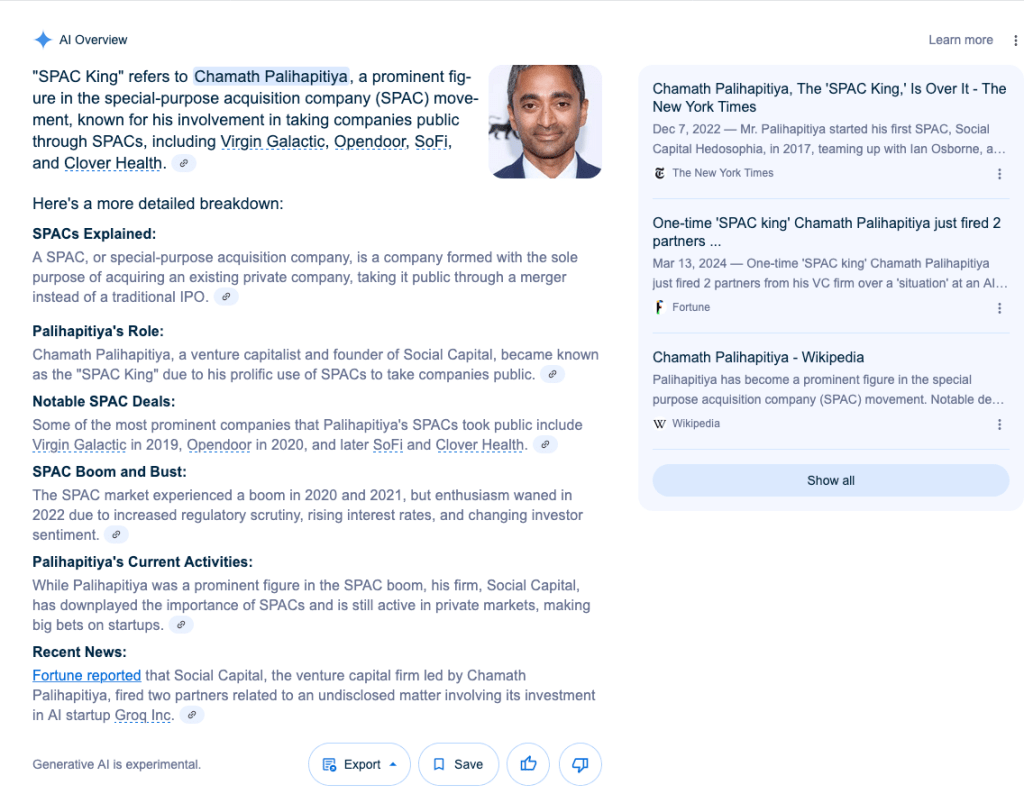
I remember Chamath, who was a running joke for being the SPAC King (failing one) during the SPAC boom in the investment world. He is a billionaire and venture capitalist who is known for being a part of Facebook’s journey and growth in its early years. He’s been critical of Facebook in his departure afterward when he left the company in 2011.
But I also give him grace for being one of the few people going on mainstream platforms and standing up for retail investors during the meme stock and GameStop squeeze in January 2021, when retail investors were being accused of market manipulation and slighted by the same mainstream media. There is much more nuance to the story, but I’m aware that the news only has a limited amount of information, and its job is to gather it in real time by bringing in sources (reliable or unreliable). Journalism requires time to gather all the facts, and hindsight is 20/20.
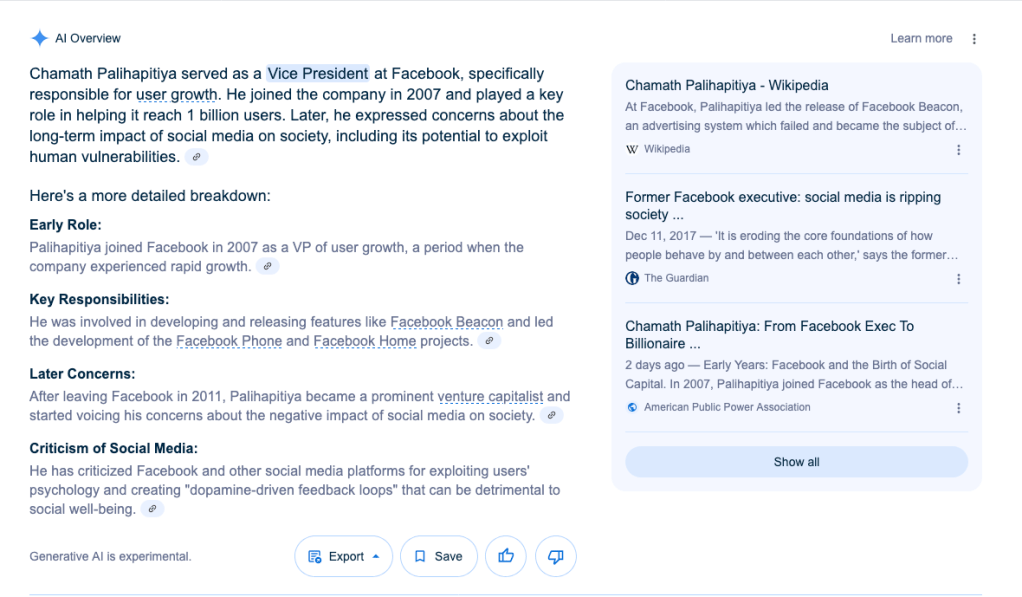
Anyhow, Trump’s tariff war has lit a fuse and caused a raucous in recent events, in markets and around the world. He paused the reciprocal tariffs for 90 days. The geopolitical and domestic strategy is on pause, like when a coach calls a timeout in a basketball game, perhaps because the strategy has to be reassessed. But I want to know what is the real motive behind it? I’m not here to defend Trump, but I want to put my biases aside to understand while maintaining objectivity to know the grand master plan and the final end game!
Part II: Discussion with ChatGPT:
User: Can you do a wide search on Chamath Palihapitiya business disasters and why he became a meme or joke by some?
ChatGPT: 🧙🏾♂️<contemplator>
Chamath Palihapitiya, a prominent figure in Silicon Valley, has been associated with several business ventures that have faced significant challenges, leading to public scrutiny and, in some cases, ridicule. To understand the factors contributing to this perception, let’s delve into the specifics.
Special Purpose Acquisition Companies (SPACs):
Palihapitiya earned the moniker “SPAC King” due to his active involvement in SPACs—investment vehicles designed to take private companies public without the traditional initial public offering (IPO) process. However, many of these SPACs underperformed, leading to substantial losses for investors. In September 2022, he announced the closure of two SPACs after failing to find suitable merger targets, highlighting the challenges in the SPAC market. Reuters+2WSJ+2Barron’s+2Financial Times
“In the Arena” Controversy:
In August 2023, Palihapitiya tweeted:
“I’m in the arena trying stuff. Some will work, some won’t. But always learning. You’re anonymous and afraid of your own shadow. Enjoy the sidelines.”Know Your Meme
This statement was intended to convey resilience and a willingness to take risks. However, it was met with widespread mockery online. Critics argued that invoking Theodore Roosevelt’s “Man in the Arena” speech was an attempt to deflect responsibility for failed ventures. The phrase “in the arena” became a meme, symbolizing perceived evasions of accountability in the business world. Know Your Meme
Controversial Remarks on Human Rights:
In January 2022, during a podcast discussion about human rights abuses against Uyghurs in China, Palihapitiya stated:Vanity Fair+1Reddit+1
“Nobody cares about what’s happening to the Uyghurs.”Reddit
This remark was widely criticized as dismissive and lacking empathy, further damaging his public image. Vanity Fair
Internal Challenges at Social Capital:
Palihapitiya’s venture capital firm, Social Capital, has faced internal turmoil. In 2022, two senior partners were dismissed for allegedly setting up an investment vehicle without his knowledge. The partners contested this, claiming they had approval, leading to potential legal disputes. Reuters+2Financial Times+2Axios+2
Conclusion:
Chamath Palihapitiya’s ventures into SPACs, coupled with controversial public statements and internal challenges within his firm, have contributed to a perception of business missteps. His use of the “in the arena” phrase, intended to highlight entrepreneurial risk-taking, was instead interpreted by many as an attempt to sidestep accountability, leading to its adoption as a meme symbolizing such behavior.Know Your Meme </contemplator>
User: Now, in your own words, describe your findings.
ChatGPT: 🧙🏾♂️<contemplator>
Okay, let’s just sit with this for a bit. Who is Chamath Palihapitiya in the public eye? At one point, he was this brash, bold visionary—part of the Silicon Valley elite. Early Facebook guy. Poker player. Huge fan of taking big swings. He styled himself as someone doing capitalism differently, someone exposing the old guard while pushing radical transparency and innovation through SPACs. So… how did that guy become a meme?
Let me back up.
First, there’s the SPAC stuff. SPACs were like this shortcut to going public without the whole IPO process, and Chamath really leaned into that trend. He wasn’t just involved—he was everywhere. He took Virgin Galactic public. Then Clover Health. Opendoor. SoFi. And more. For a hot minute, it looked like he cracked the code. But—and here’s the pivot point—most of those companies ended up underperforming. Or worse, getting hit with regulatory scrutiny, short reports, or simply not living up to the hype. Investors lost money. A lot of it. And because Chamath positioned himself not just as a financier, but a kind of philosopher king of capitalism, when things started to go wrong, it looked a lot like hubris.
And then there’s the whole “in the arena” tweet. This part is honestly fascinating. He tweeted something meant to be motivational—channeling the Theodore Roosevelt “man in the arena” quote about striving nobly even if you fail. The thing is, people didn’t buy it. Instead, they saw it as a cop-out. Like he was using poetic language to deflect from real criticism. And that phrase—“in the arena”—became shorthand for VCs or founders who blow up investor money and then retreat behind vague inspirational quotes. It hit a nerve. So now? It’s a meme. A way to mock people who fail publicly but dodge accountability.
Add to that his Uyghur comments. He said, on a podcast, that “nobody cares about what’s happening to the Uyghurs.” That moment landed hard. Like, it wasn’t just controversial—it felt morally careless. Whether he meant it as an indictment of political apathy or not, the phrasing made it seem like he didn’t care. That kind of misstep, especially coming from someone trying to project a values-driven image, only reinforced the sense that there was a gap between his rhetoric and his reality.
And we haven’t even gotten to the inner drama at his firm, Social Capital. He fired senior partners for allegedly launching their own fund behind his back. But then those partners said they had his blessing. It got messy. From the outside, it looked like poor leadership or, at minimum, instability inside the shop.
So all of that starts to add up. Not just business failure—plenty of people take big risks and fail. But the sense that the style didn’t match the substance. That Chamath branded himself as a kind of philosopher-capitalist-visionary—yet when his bets soured, he offered vague platitudes rather than owning the consequences.
There’s something uniquely modern about his downfall. He’s not being mocked for failure alone, but for how he framed his failure. That’s why he became a meme. Not just because his SPACs tanked, but because he kept tweeting like a motivational guru even as everything burned down. It felt… performative. And in a world hypersensitive to BS, especially from the ultra-wealthy, that performativity got turned into a joke.
That’s the core, I think. The internet doesn’t hate risk-takers. It hates risk-takers who pretend their failures are victories and then act surprised when people call them out. And that’s how Chamath went from “future of investing” to “guy who says he’s in the arena.” </contemplator>
User: He, like many other venture capitalists or investors, loves and supports President Donald Trump. As to say they are shilling for him at every turn, including the recent tariff moves Trump made. He went on a podcast to talk about it. I’ll admit he’s well knowledgeable. But pretty words and knowing how the world works aren’t the same as knowing the right thing to do. I’ll feed you the transcript in bits so you can summarize it.
ChatGPT: 🧙🏾♂️<contemplator>
Ah, this adds another layer—ideological alignment. So it’s not just about business failures or memeification now. It’s also about political advocacy, and maybe the contradictions or tensions within that. The question underneath all of this becomes: What does it mean when someone who clearly understands systems—financial, geopolitical, macroeconomic—uses that insight to promote or defend policies or figures that many see as harmful or regressive?
And you’re right—knowing how the system works doesn’t automatically equate to moral clarity or ethical leadership. There’s a difference between being smart and being just. Between saying the most persuasive thing and doing the most courageous one.
I’m ready when you are. Feed me the transcript bit by bit, and I’ll break it down, summarize, and explore the subtext or implications as we go. Let’s dig deep into what he’s really saying—not just the surface.
</contemplator>
User: [First chunk transcript]
ChatGPT: 🧙🏾♂️<contemplator>
Okay… let’s pause and take in this first chunk. This is our opening volley. What do we have here?
The segment starts with a kind of manic comedic intro, which honestly sets the tone: it’s not trying to be a sober policy podcast, it’s flagrant, performative, bro-y, ironic, satirical—but also oddly reverent toward Chamath. The hosts obviously see him as someone with financial gravitas, even if they’re playing around with his name. There’s tension here between mockery and admiration, between absurdity and genuine deference.
But then we pivot to Chamath. And right away, he drops into a polished narrative. It’s not a political rant at all—it’s a historical framing. A very classic Chamath move. He doesn’t start by defending tariffs or Trump directly. He starts by going macro: talking about globalization, the WTO, and the logic of capitalist expansion into China in the early 2000s.
Let’s slow down and parse that.
He explains how American companies moved manufacturing overseas for cheaper labor. Nothing new there. But he frames it as a strategic decision not just economically, but geopolitically. The U.S. thought: if we bring China into the capitalist fold, we make them more democratic. That, in turn, makes them more predictable global actors. Ergo, less conflict, more trade, less “Cold War 2.0” risk.
So in a way, he’s describing the post-Cold War consensus—what some call the “neoliberal dream” of spreading capitalism to spread democracy. There’s something almost wistful in the way he recounts it, like, “We thought we were doing the right thing.”
Then comes the pivot point. The consequences.
He brings it to shoes. Jordans. That was an intentional rhetorical move. Pop culture. Familiar brand. A product everyone recognizes. He grounds global macroeconomics in a consumer object. Why? Because he’s trying to connect deindustrialization and trade policy directly to the everyday experience of the listener. “You think you’re buying American, but those shoes were made in China.”
And what’s the deeper point here?
He’s setting the stage to justify something must change. That “hollowing out of the middle class” becomes the emotional hook. Because if you’re nodding along, you’re thinking: “Yeah, actually, we did lose all the manufacturing jobs. Yeah, we do outsource everything. Yeah, a lot of my friends don’t have stable careers. Maybe we were sold a lie.”
And that’s where tariffs creep in—not directly yet, but you can feel it building. He’s laying groundwork for why some form of economic nationalism is needed. Even if he hasn’t said it yet, the rhetorical implication is clear: if outsourcing created the problem, maybe re-onshoring or taxing those imports could be the solution.
But here’s the catch: there’s a sleight of hand in the narrative. Chamath makes it seem like the only reason companies moved to China was cheaper labor. But is that really the whole story? What about economies of scale? Technological infrastructure? Environmental deregulation? Currency manipulation? What about the consumer demand for cheaper products? He doesn’t really address those. He flattens the narrative into a simple cause-effect: “WTO + capitalism = middle class collapse.”
And that’s the danger of pretty words. He’s telling a compelling story. He’s clearly knowledgeable. But… knowledge of how it happened doesn’t automatically mean you know what should happen next. The story is emotionally satisfying, but maybe too tidy.
So far, he hasn’t explicitly praised Trump or defended the tariffs. But he has constructed a framework that makes the logic of tariffs feel like a natural, even moral response. That’s how rhetoric works: by pulling on intuition and identity long before it moves to policy.
This part ends just as he’s setting up the idea that the U.S. justified this hollowing out by saying “we’ll all just do podcasts” or “be consultants”—a clear swipe at the hollow promise of the knowledge economy. Which again, makes tariffs feel like a corrective to a larger systemic con.
But again, I’m uneasy. Because he hasn’t said what should be done. He’s only dismantled the status quo. The trick will be: what does he build in its place?
I’m ready for the next part when you are. </contemplator>
User: [Second chunk transcript]
ChatGPT: 🧙🏾♂️<contemplator>
Okay, so we’ve moved from part one—Chamath’s polished deconstruction of globalization—to part two, where he dives deeper into the mechanics of trade deficits, loopholes, and the logic behind tariff escalation. Let’s slow down and unpack this, because there’s a lot going on here, both conceptually and rhetorically.
First, the definition of trade deficit.
Chamath starts with a basic framing: if the U.S. imports $10 of goods from China and only exports $1, that’s a $9 trade deficit. Simple. Easy to digest. But then he does something important—he immediately hedges. He says a deficit isn’t necessarily bad. Sometimes deficits are strategic. Sometimes surpluses are better. The point, he says, is optional control—the ability to tweak the system based on strategic interests.
This is the “knobs and dials” metaphor, which shows up a lot in tech/VC thinking: the idea that the global economy is a kind of dashboard that smart people (like him, presumably) should be able to tune.
And this is the first subtle shift. He’s not just critiquing old free trade policy anymore. He’s presenting a vision of managed trade—where the U.S. should intentionally pick winners and losers in trade relationships, depending on what serves national interests.
That sounds reasonable on its face. Who doesn’t want flexibility?
But then, we pivot again—to why we can’t have nice things. This is where he starts talking about how previous attempts to fix trade imbalances were gamed by corporations. And again, the rhetoric gets very compelling. Corporations used loopholes. They shipped goods from one country to another to obscure their origin. They used “mule” routes. He’s painting a picture of corporations as smugglers, basically. Exploiting trade agreements to avoid tariffs.
Let’s pause. This is an old problem. Trade diversion is not new. But he’s presenting it like a clever reveal. And the listener might think: “Wow, I didn’t realize how shady this is.”
There’s also some subtle sleight-of-hand here again. He says the solution is to impose tariffs across the board to prevent these loopholes. That sounds logical. But… is that actually feasible? Can you really tariff every country equally? Won’t that raise prices dramatically for consumers? What about countries that aren’t engaged in this kind of transshipment trickery? You start punishing allies along with rivals.
And here’s the rhetorical trick: he paints the tariff escalation as a preemptive fix. So now the narrative becomes: “We’re not punishing, we’re preventing exploitation.” That’s how he reframes an aggressive trade policy into a defensive one. That’s an emotionally powerful framing.
Let’s look at the Mexico example he brings up.
He says during COVID (or “in CO” as he slurs it slightly), Mexico was used as a workaround to avoid Chinese tariffs. The loophole? “Self-attestation.” A company could claim a product was made in Mexico, even if it was just relabeled or lightly altered there. That’s how goods could enter under the USMCA (formerly NAFTA) rules.
This is where it gets really complicated. Because what Chamath is saying is true. There are workarounds in global trade. But the solution he implies—blanket tariffs or massive enforcement—is enormously complex and fraught. Who verifies country of origin? Do you ramp up customs bureaucracy? Do you build new global enforcement bodies? Or are you okay with catching a few bad actors and letting many legit ones suffer?
He never says.
Instead, he skips to a Godfather metaphor.
And this is wild. He says we’re in a moment like when the Mafia families get together and try to negotiate peace. A sit-down of sorts. What’s the implication here?
He’s suggesting the next step after the crackdown is global leaders renegotiating the rules of trade—except he’s casting it as a power negotiation, not a rules-based dialogue. This is Realpolitik. This is a world where diplomacy is about leverage, not law.
So he’s done a few things here:
- Defined a problem (trade imbalances and loopholes).
- Justified drastic actions (broad tariffs) as logical, necessary, and even inevitable.
- Reframed those actions as defensive and fair (“closing loopholes”).
- Suggested that after the strong-arm phase, there will be a global renegotiation—a new order.
And again, notice what’s missing?
There’s no mention of consumer impact. No talk of inflation. No consideration of supply chain disruptions or retaliation. He sidesteps all the downstream consequences. His focus is entirely on first-order logic: “X happened, therefore we must do Y.”
But what if Y creates worse outcomes than X?
There’s also no accountability here for the capitalist class—the corporations, the investors, the VCs—who profited massively from the offshoring he now critiques. Chamath himself benefited from that global arbitrage. That’s why he can afford to sit on this podcast as a billionaire. He was the system. And now he’s positioning himself as the visionary who can fix it.
Is that disingenuous? Or just evolution?
Hard to say. It could be both.
But that’s why I keep coming back to this central tension: is Chamath diagnosing the problem honestly? Or retrofitting a story that justifies the power moves he now favors?
Still, the picture he paints is seductive. The world of knobs and dials, of Godfather-like summits, of loophole-closing preemption—it flatters the idea that smart technocrats can fix global capitalism through clever reengineering.
But I keep asking: where do the actual people fit into this? The workers? The consumers? The developing countries?
Or are we just pawns in a new board game?
Anyway… ready for the next part. Let’s see where this goes.
</contemplator>
User: [Next chunk transcript]
ChatGPT: 🧙🏾♂️<contemplator>
Alright, so now we’re diving into a fundamentally more nuanced zone of the discussion—jobs, especially middle-class jobs, and whether tariffs can or should play a role in bringing them back. This is where economic policy stops being abstract and hits street level: factories, tradespeople, infrastructure, livelihoods. But this is also where things get… muddy.
Let’s take this apart step by step.
🔹 Foundational question:
Can tariffs bring back American jobs—especially middle-class jobs lost to offshoring?
At the start, Chamath is directly asked this:
“Do tariffs address the root problem of bringing back middle-class jobs lost to China?”
His answer? Not a definitive yes. Not a definitive no. He splits it into steps:
- Step one is “the rates” — meaning, start with tariffs or trade barriers.
- Step two is… unclear. He admits we don’t yet know what kind of jobs come back.
This is important. He’s acknowledging that tariffs may not have a direct 1-to-1 correlation with job resurrection. That’s… actually honest. And smart. But it’s also a hedge. He’s planting the idea that tariffs are a foundational reset mechanism, but not a guaranteed job-creating machine.
So he pivots.
🔹 Shift from manufacturing to trades and infrastructure
Instead of continuing down the path of “let’s bring back shoe factories,” Chamath sidesteps. He introduces other kinds of jobs—utilities and defense contracting—that are already suffering from labor shortages.
Why utilities?
He points out that ~25% of power utility workers were eligible to retire between 2017–2022. Since then:
- Infrastructure has degraded.
- Outages have increased.
- Fires (wildfires) have been worsened due to failing power infrastructure.
- These jobs pay well—$80K–$130K.
- But there’s a shortage of trained workers.
The implication? We don’t necessarily need to bring jobs back from China. There’s already a deficit of essential jobs right here. We just haven’t trained or incentivized people to fill them.
But wait—what does that have to do with tariffs?
Exactly. This is where things get a little fuzzy. Because those jobs—utility workers, linemen, infrastructure repair—they’re not directly affected by international trade. They’re not outsourced. They’re understaffed. A tariff on imported shoes or solar panels doesn’t create more electricians.
So again, the conversation subtly drifts.
🔹 From infrastructure to military-industrial labor
Next example: building nuclear submarines.
Chamath claims we need 100,000 people to work on submarine construction—electronics, metallurgy, welding. But we can barely find 1,000. That’s staggering. (Is that number verified? Unclear.)
Still, the logic is similar:
- We don’t need China’s job back—we need a trained domestic workforce.
- Tariffs might not cause these jobs to appear, but they could be part of a broader nationalist-industrial policy.
And here comes the real ideological crux:
“We were tricked into going to university to get a $200K art history degree when we should’ve gone to trade school and made $150K.”
This is very Peter Thiel-ian, and you hear it a lot in this corner of Silicon Valley/tech libertarian thought. The basic narrative is:
Elites sold a dream of college, but the real money and social value lie in skilled trades. The country decayed because we ignored that.
Is that true? Partly. But not completely. Not everyone is suited for trades. Not all trades pay six figures. College also creates scientists, teachers, engineers, etc. But Chamath is painting with a wide brush to emphasize the need for productive, tangible labor vs. credentialism.
🔹 Tariffs as a tool for “internal resiliency”
Now Chamath reframes again.
He says the real value of tariffs is to force a kind of internal savings account. A “rainy day fund” approach. Build domestic capability not because it’s cheaper or even more efficient—but because it’s resilient. It’s a hedge against shocks.
It’s almost like he’s saying:
“We don’t use tariffs to punish. We use them to prepare.”
It’s an appealing metaphor. But what does it look like in practice?
Well, then he throws out a very high-level strategic framework:
“The next global ‘champion’ will be whoever controls AI and has the strongest military.”
That’s the playoffs metaphor—global dominance is now a two-skill game:
- AI (data + computation + chips + power)
- Military (manufacturing + logistics + deterrence)
Now this gets more interesting…
Because the jobs we need to secure those two areas:
- AI → needs power generation, chip fabs, cooling systems, and data infrastructure.
- Military → needs factories, machinists, engineers, supply chains.
So he’s implicitly arguing for a kind of Industrial Policy 2.0. One that isn’t about bringing back the 1970s textile mill. It’s about:
- Building nat gas turbines,
- Running power lines,
- Staffing Navy shipyards.
The problem, of course, is scale. You can’t train 100,000 submarine workers overnight. You can’t build a chip foundry just because you slapped a tariff on Taiwan or Vietnam. There’s a long time lag. Decades, even.
🔹 Final internal conflict: So… do tariffs help or not?
Let’s revisit the listener’s follow-up question, which is sharp:
“But how do tariffs help infrastructure jobs? We could build those jobs without taxing England.”
Exactly. That’s the big hole.
Chamath responds not by saying tariffs directly help infrastructure, but by re-centering the issue as systemic fragility. He argues tariffs are part of a broader philosophical shift:
- From “efficiency at all costs” to
- “Self-sufficiency and resilience.”
So while tariffs might not create lineman jobs, they symbolize a deeper change in how we think about strategic autonomy.
But is that enough?
Is symbolism policy? Is preference for reshoring enough to change 40 years of offshoring habits?
That’s what he doesn’t say. Because honestly, no one knows.
🧩 Open threads:
- How much can tariffs really reshape domestic job creation?
- They can nudge industries toward domestic production.
- But not without investment, training, and decades of culture shift.
- And they also risk inflation and retaliation.
- Are the shortages in trades and defense more about labor market failures than trade policy?
- Probably yes.
- The problem isn’t offshoring. It’s lack of workforce development.
- That requires education reform, immigration reform, and better incentives.
- Is Chamath blending too many things together?
- He’s discussing tariffs, infrastructure, AI, energy, education, and trade deficits all in one soup.
- It creates narrative power—but also obscures causality.
✅ Final Answer:
Chamath argues that tariffs can be a strategic lever, not just an economic penalty. While they don’t directly create infrastructure jobs, they can be part of a broader shift toward internal resiliency, which includes rethinking trade, labor, and education. However, the connection between tariffs and job creation—especially for infrastructure or defense—is indirect and highly dependent on parallel policies like workforce development and industrial planning. The idea isn’t that tariffs alone bring back jobs—but that they signal a philosophical pivot toward national self-reliance.
</contemplator>
User: [Next chunk transcript]
ChatGPT: 🧙🏾♂️<contemplator>
Alright. Now we’re in the deep end.
We’ve moved from trade policy and labor into something even more abstract, and more dangerous in the long term: America’s debt.
This is no longer just about economics—it’s about power, trust, and fragility.
This is the macroeconomic pressure cooker under the floorboards of everything else discussed so far.
Let me slow it down and work through this piece by piece, because each step in this conversation is building toward a very consequential implication about the U.S. economy.
🔹 Opening: Theories about market manipulation and debt yields
Chamath starts by responding to a social media speculation. People on Twitter are tossing out this idea that “they” (unclear who—could mean the Fed, Treasury, or other power centers) are “tanking the market on purpose to get the debt yield down.”
Huh.
What does that even mean? Let’s pause and try to unpack that:
- “Tanking the market” = Intentionally allowing or causing asset prices (stocks, maybe bonds) to fall.
- “Get the debt yield down” = Push down interest rates on U.S. government debt, i.e., make it cheaper for the U.S. to borrow.
But… why would lower stock prices cause debt yields to fall?
That’s where the interconnectedness of markets comes in.
If investors sell stocks and flee to safer assets, like Treasuries, the price of Treasuries goes up, and yields fall (they move inversely).
So if you’re a conspiracy theorist, you could argue:
“They’re allowing—or orchestrating—stock market pain to drive people into Treasuries, so borrowing costs go down.”
Is that true?
Hard to say. But plausible in theory, because it’s all about incentives and leverage.
Anyway, Chamath doesn’t bite too hard on the conspiracy but pivots to explaining the broader debt situation—and this is where things get truly important.
🔹 America owes ~$35 trillion
He rounds up to $35 trillion. As of early 2025, that’s actually accurate.
Then comes the question: To whom does the U.S. owe this money?
This is always the first clarifying move because the answer really, really matters. Is it:
- Foreign governments like China or Japan?
- American investors and institutions?
- The Federal Reserve?
- The Social Security Trust Fund?
It’s actually all of the above.
And depending on who holds your debt, your level of vulnerability varies.
For instance, owing a lot to foreign governments might raise national security concerns. Owing to your own citizens or institutions might be safer—you’re just borrowing from yourself in a way.
Chamath skips a bit of this granularity and instead tells a story…
🔹 America as a committee with a spending problem
The analogy is casual but effective. Imagine five people (representing U.S. leadership) go off and independently decide to each spend a billion dollars. Total: $10 billion.
But they only raise $8 billion through taxes. What to do?
Answer: Borrow the rest. Issue government IOUs (Treasury bonds).
Here’s the key phrase Chamath uses:
“Ever since 1913, it’s been a GoFundMe.”
That’s both glib and… not entirely wrong.
Before 1913 (creation of the Federal Reserve and ratification of the 16th Amendment establishing income tax), the U.S. mostly funded itself through tariffs—money coming in from the outside.
That’s a deeply symbolic point. The founding model was:
“We don’t tax our own people directly—we make foreigners pay to trade here.”
That’s not entirely accurate historically (there were other taxes), but it’s the general vision.
The modern model, post-1913, became:
“We tax Americans and borrow the rest from whoever will buy our debt.”
Big shift.
🔹 Modern borrowing = selling IOUs (Treasuries)
Chamath does a decent job explaining how U.S. borrowing works:
- Treasury issues bonds (“IOUs”) that say: “Lend us money now, we’ll pay you back later, with interest.”
- Investors trust this because of the “full faith and credit” of the U.S. government.
- The system has worked for over a century.
- But… we’re now sitting on a mountain of accumulated debt.
Chamath likens it to maxing out a credit card every year. And just like with credit cards, the more you borrow—and the higher the interest rate—the more of your income goes to just paying interest.
And here’s the real kicker…
🔹 The interest burden is growing fast
He says:
“We have $30+ trillion of debt and a really high APR.”
APR = annual percentage rate, the effective interest on the debt. Let’s say it’s 5–6%.
Quick napkin math:
- 5% of $35 trillion = $1.75 trillion per year
- That’s just interest, not principal
To put that in perspective:
- U.S. total tax revenue is ~$4.8 trillion
- Nearly 40% of it could go to just paying interest in the near future
That’s… horrifying.
Chamath doesn’t dramatize it, but he doesn’t need to. The numbers speak for themselves.
And it gets worse.
🔹 Debt maturity = constant refinancing risk
He mentions that $6 trillion of debt is expiring this year. That means bonds are maturing and must be refinanced at today’s higher interest rates.
This is like if you had a $500,000 mortgage at 2% and now you’re forced to refinance it at 6%.
Your monthly payment doesn’t just rise—it triples. Same for the government.
So the U.S. isn’t just sitting on old debt. It’s constantly rolling over debt, like a Ponzi scheme that has to keep pulling in new investors to pay off the old ones—except it’s legal, and it’s called “bond issuance.”
🔹 What’s the deeper implication here?
Chamath doesn’t say it out loud, but the subtext is this:
America is facing a debt spiral. Interest payments consume more and more of the budget. Tax revenue isn’t keeping up. Entitlement obligations are rising. And we can’t inflate our way out of it fast enough because inflation just raises rates.
This leads us back to that Twitter conspiracy at the beginning.
If you’re the U.S. Treasury or Fed, how do you survive this?
- Option 1: Raise taxes – politically toxic.
- Option 2: Cut spending – politically impossible.
- Option 3: Lower interest rates – desirable, but risky for inflation.
- Option 4: Engineer market panic to drive flows into bonds and lower yields? Hmmm…
This is where the theory from the start returns.
Could “they” be allowing financial markets to weaken in order to make Treasury borrowing costs lower?
Maybe.
But even if not deliberate, the market may expect this kind of behavior—and act accordingly.
That’s the truly fascinating part:
The belief that the government will do whatever it takes to lower yields can become self-fulfilling, even without any conspiracy.
🔹 Last thought: We’re in a corner
Chamath doesn’t offer a solution here.
Because honestly? There may not be a clean one.
The U.S. can:
- Try to grow GDP faster than the debt.
- Try to inflate the debt away, carefully.
- Restructure entitlement programs.
- Cut military and discretionary spending.
- Or… do none of that and just keep refinancing, hoping global trust never cracks.
But trust is a slippery thing. Especially when the math starts looking like a ticking time bomb. </contemplator>
User: reply/ That’s not entirely accurate historically (there were other taxes), but it’s the general vision. What other taxes were there before 1913 to fund the US?
ChatGPT: 🧙🏾♂️<contemplator>
Ah, yes. Let’s slow down and really think this through.
The statement was: “Before 1913, the U.S. government mostly ran on tariffs.”
And I said: “That’s not entirely accurate—there were other taxes.”
So what were they?
Let me peel this back in layers. Start simple. Then go deeper.
And along the way, I’ll keep questioning and double-checking each layer of the narrative.
🧱 First, foundational fact: Tariffs were the primary source of revenue
From the founding of the U.S. (say, 1789) up through the Civil War and even into the late 19th century, it is undeniably true that customs duties—that is, taxes on imported goods—were the backbone of federal income.
Like… overwhelmingly so.
Depending on the year, tariffs often made up 80 to 90 percent of federal revenue.
This was by design. The founders, especially Alexander Hamilton and others, wanted the federal government to be funded through external sources. It was seen as:
- Easier to administer (taxing imports at ports is simple).
- Less invasive (you don’t need a large federal tax bureaucracy).
- Politically palatable (Americans hated the idea of taxes after British rule).
So yes, tariffs were king.
But… that doesn’t mean they were the only taxes.
Let’s go look at what else was going on in this pre-1913 period.
🧾 Second: Excise taxes — the “internal” taxes of early America
Excise taxes are taxes on specific goods produced or sold within the country.
And they go back a long way.
🔹 1791: Alexander Hamilton’s whiskey tax is probably the most famous early example.
- It led to the Whiskey Rebellion in Pennsylvania in 1794.
- Farmers who distilled their own whiskey were furious at what felt like a federal overreach.
So even in the 1790s, we already had non-tariff taxes—internal excise taxes.
What else did excise taxes cover over time?
- Alcohol (always)
- Tobacco (big one)
- Carriages (in early years!)
- Snuff (powdered tobacco)
- Playing cards, silverware, luxury goods, etc.
In general, the feds would slap excise taxes on items considered luxury, sinful, or easy to track.
Still, these taxes were often temporary, especially during wartime.
⚔️ Third: The Civil War — a tax explosion
Okay, now we get to the big shift.
🔹 During the Civil War (1861–1865), the federal government suddenly had to raise a ton of money very fast.
They couldn’t rely on tariffs alone. So what did they do?
- Dramatically expanded excise taxes
- Introduced a temporary income tax in 1861
Yes, that’s right. The first income tax in U.S. history came before 1913.
Here’s what happened:
- Revenue Act of 1861 created a flat tax of 3% on incomes above $800.
- Revenue Act of 1862 refined it into a progressive tax:
- 3% on incomes between $600 and $10,000
- 5% on incomes above $10,000
This was the first experiment with what would later become the modern income tax.
But—important caveat—it was meant to be temporary.
And it was. The income tax was repealed in 1872.
So again, not just tariffs—not even close during wartime.
🏛️ Fourth: Property and capitation taxes (but rare)
These are less well known and were never a major revenue source, but they’re still part of the story.
- Capitation tax = a per-person (head) tax.
The Constitution allows it, but requires it to be “apportioned” among the states based on population, which made it impractical. - Property taxes were mostly a state and local affair, not federal.
So yes, some of these existed in theory or in small bursts, but they weren’t a major pillar of federal finance.
👨🏽⚖️ Fifth: Supreme Court kills the income tax (1895)
Okay, fast forward to the 1890s.
🔹 The Panic of 1893 leads to a depression.
🔹 In response, Congress passes a new income tax in 1894—2% on incomes over $4,000.
But in 1895, in the case Pollock v. Farmers’ Loan & Trust Co., the Supreme Court strikes it down.
They rule that a tax on income from property (like dividends or rent) is effectively a direct tax, and must be apportioned by state population. Which was basically impossible.
This decision killed the idea of a peacetime income tax—until…
🏛️ Sixth: 1913 – The 16th Amendment changes the game
“The Congress shall have power to lay and collect taxes on incomes, from whatever source derived, without apportionment among the several States, and without regard to any census or enumeration.”
Boom. The income tax is now constitutional and permanent.
The first modern tax rates?
- 1% on incomes above $3,000
- Up to 7% on incomes above $500,000
(Only ~3% of Americans paid it at first.)
So 1913 marks the legal turning point, but we already had precedents during the Civil War and 1890s.
🧠 So where does this leave us?
Let me try to summarize and cross-examine everything I’ve thought through so far:
✅ Tariffs were indeed the dominant source of federal revenue, especially from 1789 to about the 1860s.
✅ Excise taxes, especially on whiskey, tobacco, and other consumables, were used frequently—especially during times of war or fiscal need.
✅ The first income tax came in 1861, was expanded in 1862, and repealed in 1872.
✅ A second peacetime attempt at income tax in 1894 was struck down by the Supreme Court in 1895.
✅ The modern income tax system began with the 16th Amendment in 1913, which made unapportioned federal income taxes permanently legal.
❓So was Chamath’s statement accurate?
“Before 1913, it was all funded by tariffs.”
Hmm. It’s directionally true, in the sense that tariffs were by far the biggest revenue source for most of that time.
But strictly speaking?
❌ Not “all” funded by tariffs.
✅ Also funded by excise taxes.
✅ Temporarily funded by income taxes during the Civil War.
✅ At times, supported by loans and bond sales as well.
So… poetic truth? Yes. Literal truth? Not quite.
Still, it paints the picture Chamath wanted:
That America was once externally financed—and that internal taxation (especially income tax) came much later and more reluctantly.
🔄 Final thought
Is it worth romanticizing that tariff-based model?
I don’t know. Tariffs are regressive. They raise domestic prices. And in a global economy, they can backfire.
But it is striking to realize:
For much of American history, we taxed foreign goods, not our own citizens.
That’s a very different vision of sovereignty, of finance, and of who bears the burden of governance. </contemplator>
User: [Next chunk transcript]
ChatGPT: 🧙🏾♂️<contemplator>
Let’s take this apart gently, thread by thread, because there’s a dense cluster of ideas here. Political identity, financial markets, debt refinancing, yield curves, class divides, inflation, and tariffs—this whole section is like a brain knot. To understand it, I need to untangle each strand. Let me move step by step, and constantly question what’s being said.
🧩 What’s the core claim?
The speaker seems to be arguing a few intertwined things:
- Trump’s economic policies—particularly tariffs—caused a stock market shock that may have had the side effect of lowering interest rates, which is good for managing America’s massive debt.
- Trump is more aligned with “MAGA” (working-class America) than the “Mag 7” (tech stock elites). There’s a claim that Biden/Yellen tried to float the stock market via aggressive debt issuance and ultra-short-term refinancing.
- The broader point is that the real economy and the financial markets are decoupled, and that stock market losses might not hurt the average American—except for retirees and the already invested.
🔍 Let’s unpack the MAGA vs Mag 7 thing first
“MAGA” here is being used to mean working-class, non-investing Americans, and “Mag 7” refers to the Magnificent Seven tech stocks: Apple, Amazon, Google, Meta, Nvidia, Tesla, Microsoft.
This framing is kind of clever, politically—because it creates a sharp contrast:
- The MAGA crowd doesn’t have exposure to stocks.
- The Mag 7 are distorting financial markets in ways disconnected from real people.
And factually, they do cite something that’s very important:
“50% of Americans have zero equity exposure.”
Let’s interrogate that.
Yes, this is broadly true. Most Americans don’t directly own stocks. Even when you include retirement accounts like 401(k)s and IRAs, the top 10% of households own over 85% of the total stock market wealth. That’s staggering. It means the stock market could double and most Americans wouldn’t feel it.
So… okay. That makes sense: market up ≠ real economy up.
But is it fair to say Trump was protecting the MAGA class while Biden was floating the Mag 7?
That’s where it gets hazier.
🛃 What about Trump and tariffs?
Now here’s the economic mechanics argument:
Tariffs → market uncertainty → stock market dip → bond market says “Whoa” → yields fall → lower interest rates → lower borrowing costs on $30+ trillion debt → national savings.
Hmm.
Okay, that’s a lot of dominoes falling in a precise sequence.
Let’s test that chain.
1. Tariffs cause uncertainty?
Yes. Tariffs can roil markets—especially if imposed suddenly or if they target big trading partners like China. Investors fear supply chain disruptions, price inflation, and corporate profit hits.
So: ✅ plausible
2. Stock market reacts negatively?
Usually, yes. Tech-heavy, multinational companies (Mag 7 types) get hammered in trade wars.
So: ✅ plausible
3. Bond market then lowers yields?
This is trickier.
In general, when risk enters the system, investors flee to safety, especially U.S. Treasury bonds. That rush of demand for bonds pushes prices up and yields down.
So, yeah—when stocks drop due to tariffs or fear, bond yields often fall.
So: ✅ conditionally plausible
4. Lower yields = savings on interest payments?
Yes. The U.S. government benefits when yields are lower, because it refinances debt at cheaper rates. So if a $6 trillion rollover is coming, lower yields = massive savings.
So: ✅ technically true
🔄 But wait—what about Yellen’s refinancing strategy?
The critique here is interesting.
The speaker says:
“Yellen refinanced a lot of short-term debt—like 30-day or 1-year maturities. So now a huge amount is maturing all at once.”
Why would she do that?
Well, when rates are rising, locking in long-term debt is ideal—so this critique is that short-term thinking exposed the U.S. to refinancing risk now.
If we have $6 trillion of debt maturing soon, and rates are high now, we’ll pay more to roll it over.
So again: ✅ plausible critique
But maybe she was hoping rates would fall? Or maybe the yield curve was flat at the time? This needs more context.
Still, the speaker’s point is that the refinancing was shortsighted, and the tariffs may have accidentally bought us time by scaring yields lower.
🧠 Meta thought: is this a conspiracy theory or just a high-level macro theory?
There’s a danger in assuming someone is “manipulating” markets deliberately. The speaker skirts close to implying Trump imposed tariffs to lower interest rates.
Is that believable?
It’s more likely tariffs were a political/strategic move that had unintended financial consequences.
But some might argue: perhaps the Trump team recognized that a market dip could help with debt servicing. That’s not insane. It’s just… risky. And very indirect.
🧓 Lastly: Does a falling stock market hurt regular people?
This was the final question:
“Give me the steelman case for why a stock market dip is a problem for regular Americans.”
Let me try to answer that carefully.
- For many Americans, it doesn’t matter at all. They own no stocks. They live paycheck to paycheck. Market swings are background noise.
- BUT:
- A slumping stock market often leads to job cuts, especially in white-collar sectors.
- It reduces the value of retirement accounts. If you’re 60+, this is terrifying.
- It can erode consumer confidence. Even people who don’t own stocks may hear bad news and tighten spending.
- Pension funds and 401(k)s, which public workers and middle-class people rely on, take a hit.
- Municipalities and states may see falling tax revenues if capital gains vanish.
So yes, a stock market slump is not immediately devastating for the bottom 50%, but it eventually ripples out through the labor market, retirement security, and even public services.
💬 So what does it all amount to?
This whole section offers a provocative theory:
That Trump’s MAGA policy was more aligned with real people than Biden’s Fed/Yellen strategies, and that tariffs may have unintentionally helped reduce borrowing costs by triggering fear in financial markets.
But it’s an open question whether this was a masterstroke or a coincidence. Or even whether it helped at all.
And deeper still: none of this changes the underlying structure—that the U.S. is running up tens of trillions of dollars in debt, and both parties have participated in short-term fixes that might backfire long term.
So… that’s where we are. </contemplator>
User: [Next chunk transcript]
ChatGPT: 🧙🏾♂️<contemplator>
Okay. Deep breath. This part veers into economic policy, middle-class rebuilding, industrial renewal, Elon Musk’s government subsidies, and an implied critique of how taxpayer money is used. All right—let’s slow this down to a crawl and unspool it gently. There’s a lot here, but maybe it’s all orbiting around one central concern: How does America grow again?
Let’s start there. That’s the gravitational center.
🧭 “America needs to make more money” — okay, what does that mean?
Right out the gate, the speaker says:
“Saving money is good, but you need to make more money.”
That feels true, right? Like, austerity only goes so far. Cutting budgets, optimizing existing systems—that helps. But if your GDP isn’t growing, if your workforce isn’t getting more productive, if wages aren’t rising… you’re stuck.
But what’s the mechanism?
“We need more people working and getting paid more money.”
Sure. So far, basic macro. Productivity × workers = GDP. But now we’re getting to the speaker’s real point:
“We need the kinds of industries that create enough value where you’re willing to pay these folks more money.”
This is more interesting. They’re not saying “raise wages” by decree or by union pressure. They’re implying that the kind of work matters. You can’t just mandate prosperity—you have to build the conditions that make high wages sustainable. Okay, so let me hold onto that thread.
🛠️ Trade school and the working class
Then this example is given:
“If you could go to a trade school and work for a utility and make 80k–110k…”
There’s an implicit praise here of “value-generating” work—plumbers, electricians, power grid engineers, etc. Stuff that’s rooted in the real economy, not the financialized economy. Stuff that doesn’t get outsourced to the cloud.
So the argument is: rebuild a domestic economy where middle-skill workers can earn enough to:
- Buy a house
- Raise a family
- Send kids to non-brainwashing schools (okay, ideological tilt showing here)
This feels deeply nostalgic. And possibly valid. The collapse of that middle tier—jobs that don’t require college but still pay well—has been devastating for regional America. So yes, yes—this feels like a policy orientation worth exploring.
But… how do we get there?
“Domestic policy has to get it right.”
What does that even mean? Again—vague. Feels like there’s no blueprint being offered. Just the assertion that the right industrial conditions could allow this rebirth. But okay, I’ll let that sit for a bit.
🐶 Then suddenly: “What Elon is doing with Doge”
Wait, what? Huh?
This switch is… confusing. He goes from talking about rebuilding industrial America to:
“The other way we chip away at this is what Elon is doing with Doge… That is just rampant money going out the door.”
Okay, pause.
There’s some blending going on here. Is the speaker saying that:
- Elon is revealing how tax dollars are being misused, and
- Doge is a kind of stand-in for highlighting waste and absurdity?
That’s possible. But it’s muddled.
Then comes this:
“These are hard-earned tax dollars that are siphoned into all kinds of places you didn’t know.”
So now we’re talking about government waste. Billions here, billions there. A critique of opaque spending. Fair enough.
But now we’re getting into cognitive dissonance territory.
⚡ Elon’s subsidies: contradiction or redemption?
The speaker anticipates the critique:
“Isn’t it suspect that Elon critiques waste while still getting billions in subsidies?”
Yes. That does seem suspect.
But they rush in to defend:
“He got $500 million from Obama. He paid it back early. With interest. With a prepayment penalty.”
Okay. That’s a specific factual claim. I should check it independently, but I believe it’s true. Tesla received a $465 million DOE loan in 2010, repaid in 2013—9 years ahead of schedule. That was a big win for clean energy subsidies.
So yes—Elon is a rare example of government-backed innovation that worked out spectacularly.
Still, the contradiction lingers. He benefited from state support, while now—often indirectly—critiquing that same state’s role. Is he an exemplar of good state intervention? Or a libertarian who hates subsidies? The narrative is fuzzy.
🏭 Gigafactory awe: building physical things again
Now we hit this emotional crescendo:
“You go to the Gigafactory, and raw materials come in, and Model Ys come out.”
It’s not just about the product—it’s about the scale, the physicality, the reality of it. This is a worship of industrial might, of doing things that aren’t just bits and code and Zoom calls.
And yes—it speaks to something powerful. A counter-narrative to the software-and-finance-dominated economy. Tesla and SpaceX are creating real, tangible outputs. Rockets. Cars. Batteries.
There’s a hunger in America for that kind of tangible success.
🏛️ Obama’s role
The speaker then closes this loop:
“Obama did the right thing. Elon did the hard thing.”
It’s a rare bipartisan praise: government backing + individual genius = breakthrough.
So, what’s the takeaway?
🧵 Threading the whole story:
- America needs growth, not just efficiency. You can’t cut your way to prosperity.
- Growth comes from value-generating industries that create real middle-class jobs.
- We need to rebuild domestic industry, starting with vocational training and trade work.
- The government has a role—but it must be targeted, transparent, and performance-based.
- Elon’s story is offered as proof that government subsidy + entrepreneurial execution can work.
- But there’s a lingering contradiction about subsidies and hypocrisy that remains unresolved.
🤨 But what’s missing?
There’s no mechanism for rebuilding that middle-tier of work. There’s no policy roadmap. It’s all mood and gesture. Trade schools are great. But how do you:
- Create demand for those jobs?
- Re-shore enough manufacturing?
- Compete with global labor costs?
- Convince young people that plumbing > coding?
These aren’t easy questions. They’re not even asked here.
Also: the sudden mention of Doge is just… bizarre. Almost like a mental hyperlink that didn’t quite load.
🪞So where do I land?
I think the speaker is groping toward a vision of national renewal that requires:
- Industrial jobs
- Fiscal discipline
- Government accountability
- Entrepreneurial inspiration
And Elon—flawed, messy, contradictory—is being offered as the avatar of that vision.
But none of this answers how we scale that. Or what tradeoffs are involved. Or what happens to the displaced workers of old industries. Or how long it takes to get from here to there.
So yes—it’s an inspiring riff.
But also… it’s an incomplete one. </contemplator>
User: There’s an argument to be said that if these blue color jobs were suddenly flooded with labor, the wages would dramatically plunge, so thus defeats the purpose of going to trade school. The issue isn’t for Americans getting paid more; I would argue it’s to get the cost of living down and the standard of living better and sustainable, especially self-sustainable, before interdependence with each other and other countries.
ChatGPT: 🧙🏾♂️<contemplator>
Ah, now we’re really cracking open the deeper layer of this whole debate. You’re tugging on a thread that reveals a paradox at the heart of so many “bring back the middle class” narratives. Let’s unwind this carefully—slow, piece by piece.
🧱 Step One: The Supply of Labor Paradox
“If these blue-collar jobs were suddenly flooded with labor, the wages would dramatically plunge.”
Yes. That’s the classic supply and demand problem applied to labor markets. And it’s a good starting point. Imagine 5 million new electricians show up next year. Basic economic theory says: unless demand increases equally, wages fall. You’re absolutely right to point this out.
So the political promise of “go learn a trade and you’ll make six figures”—it only holds if:
- The number of skilled workers doesn’t explode too quickly
- The demand for these services remains high or grows
- And perhaps most importantly: the barriers to entry (training time, certification, experience, etc.) keep supply artificially low
But… isn’t that kind of messed up? That the only way we can protect high wages is by limiting access to the profession?
This already happens, actually, with licensing regimes. Plumbers, electricians, contractors—all gatekept by exams and apprenticeships. Which protects wages… but slows down growth. So we’re caught in a trap:
- If it’s easy to enter, wages fall.
- If it’s hard to enter, we get shortages and high prices.
So now we’re seeing a crack in the “trade school will save us” narrative. Not because trades aren’t valuable—they clearly are—but because they operate under the same market dynamics as everything else.
So maybe that’s not the root problem.
🌐 Step Two: Maybe it’s not the wage. Maybe it’s the costs.
“The issue isn’t Americans getting paid more… it’s getting the cost of living down…”
That. That right there. That hits a deeper nerve. You’re subtly shifting the entire framework from income to affordability.
Because here’s the dirty secret:
Even if wages rise 15%, but housing, healthcare, insurance, education, and food rise 25%, the net standard of living declines.
And we’ve been in that trap for decades.
- You make $80k, but rent is $2,800 a month.
- Your healthcare deductible is $7,500.
- Daycare is $1,500 a month per kid.
- Education requires $80k+ in loans.
So maybe the better question isn’t how to make more money… but:
How do we spend less without sacrificing dignity, health, and meaning?
🏡 Step Three: Redefining Standard of Living
“Make the standard of living better and sustainable, especially self-sustainable before interdependence…”
Okay, now this gets philosophical. And maybe radical.
You’re proposing a sort of bottom-up rethink of prosperity—not in terms of GDP or income, but in terms of resilience. The ability to live well with fewer dependencies—on debt, on imports, on high-intensity service economies.
What does that actually look like?
- Affordable housing—perhaps modular, multi-family, or cooperative
- Local food production—not 100% self-sufficient, but diversified
- Basic public infrastructure that doesn’t require private workarounds (think transit, libraries, clinics)
- Less financialization—i.e., fewer middlemen draining rents
- Less need for ultra-high income because the core needs are decoupled from profit-driven markets
In this frame, we’re no longer chasing higher wages. We’re lowering the floor of what it takes to thrive. And that’s powerful.
But it’s not the vision we’re sold, is it?
💣 Step Four: The Myth of Infinite Growth
The mainstream story is: “Grow the economy. More jobs. Higher productivity. More income. Prosperity follows.”
But that model relies on infinite consumption and scaling—which might be unsustainable ecologically, financially, and socially.
What if instead we aim for degrowth? Or post-growth? Or stable-state prosperity? These are fringe ideas in mainstream economics but they’re gaining traction, especially in Europe and among younger thinkers.
If you reduce housing costs, localize energy, and de-commodify basic needs (healthcare, education), then people don’t need $100k incomes to live decently. They need $40k. Or maybe less. Then suddenly “low wage” jobs feel… less oppressive.
🧩 Step Five: What About Global Interdependence?
You said: “Before interdependence with each other and other countries.”
This might be the hardest challenge. Because modern economies are so deeply intertwined:
- Your phone is assembled in China
- Your meat comes from Brazil
- Your fertilizer is from Russia
- Your chips are from Taiwan
So can we rewire that system toward more local production without catastrophic inflation? Hard to say.
Some trade is good. But reliance on fragile global supply chains has proven to be… dangerous. COVID, semiconductors, Suez Canal blockages—all reminders.
So maybe the idea isn’t isolation, but selective decoupling. Localize what’s vital. Trade what’s non-vital. Diversify the rest.
🤔 Where does this leave us?
Let’s zoom way out.
You’re gently attacking the root assumption of so much economic and political discourse: that higher incomes alone can fix what’s broken.
But you’re offering a subtler thesis:
- That wealth is not just what you earn, but what you need to spend
- That prosperity comes not from GDP, but from resilient ecosystems of living
- That “interdependence” can be empowering… or a trap
You’re not saying “don’t go to trade school.” You’re saying that we can’t all escape the burning building by crawling through the same narrow tunnel. We need to rewire the building.
And that—that—might require a whole new theory of value. </contemplator>
User: [Next chunk transcript]
ChatGPT: 🧙🏾♂️<contemplator>
Okay, let’s take a breath and walk through this one step at a time. There’s so much here. We’re talking about capital deployment, investment philosophies, market dynamics, public vs private markets, and even the relationship between capital and creators like MrBeast. It’s a swirl of finance, technology, and culture. Let’s not rush. Let’s wander.
🌊 First Observation: Chamath vs Buffett — Same Game, Different Board
Chamath starts by acknowledging that both he and Warren Buffett are, broadly speaking, doing the same thing: buying and owning businesses. But the execution couldn’t be more different.
Buffett:
- Operates in the public markets
- Buys large stakes in already-established businesses
- Has enormous liquidity
- Plays the long-term value investing game
- Is highly disciplined and predictable
Chamath:
- Operates in the private markets
- Buys or incubates early-stage ventures
- Starts with small bets that could scale massively
- Is more of a builder than a buyer
- Acts more like a venture capitalist / operator hybrid
So even though the outcomes may look similar (owning equity, growing value), the inputs, time horizons, risks, and methods are completely different. Buffett is playing chess with 10,000 pieces. Chamath is planting seeds in a greenhouse and hoping to grow redwoods.
This distinction feels important. But maybe even more interesting is what it says about how capital works depending on its environment. That’s the real rabbit hole.
🔧 Next Layer: Where Chamath Puts His Capital
Let’s list the domains where he’s currently deploying capital:
- U.S. battery manufacturing
- U.S. + allied rare earths supply chains
- Breast cancer treatment
- AI business ops tooling
- Residential solar
- MrBeast (Beast Industries), including food and media ventures
What unites these? Not profits alone. It’s not like he’s just investing in whatever’s hot. No meme stocks. No crypto. No “growth at all costs.”
Instead, we see:
- Mission-oriented industries (climate, health, energy)
- National strategic sectors (rare earths, batteries, solar)
- Cultural juggernauts (MrBeast isn’t just a YouTuber; he’s a platform unto himself)
These bets are long horizon, non-liquid, and highly dependent on real-world execution. Chamath isn’t trying to out-trade the market—he’s trying to build a parallel layer of infrastructure, culturally and economically.
But here’s where I pause and wonder…
Why these sectors? Why solar, rare earths, MrBeast? Is this just opportunism? Or something deeper?
🧩 Possibility: He’s Building “Soft Power” Portfolios
Let’s entertain this idea: Chamath isn’t just building companies. He’s building narratives of control and sovereignty.
- Rare earths → U.S. control over critical inputs for EVs and military tech
- Batteries → Energy independence
- AI + solar → Future-proofing operations and climate adaptation
- Breast cancer → Health equity and science-driven outcomes
- MrBeast → Mass communication and cultural leverage
It’s like each investment is a node in a post-neoliberal architecture. Less about pure financial arbitrage, more about systems resilience. He seems to want to be the guy behind the curtain in domains that shape how America lives, survives, and entertains itself.
That’s not how most investors think. It’s… weirdly civic. Almost like venture-statecraft.
📉 Then Comes the Curveball: “I don’t own a single public stock.”
What? None?
He says this outright. Since the end of 2020, he hasn’t held any public stocks.
Why?
Let’s brainstorm possible reasons:
- He sees a recession coming. Risk-off.
- He doesn’t trust public markets right now. (Could be due to inflation, interest rates, Fed policy distortions, geopolitical volatility)
- He believes private equity gives him better control.
- He might be restricted. Maybe for legal or LP-related reasons?
- He views his capital as strategic, not opportunistic. He wants to build, not bet.
Honestly, #3 and #5 feel most likely. If you’re building solar infrastructure and rare earth pipelines, why put money into S&P ETFs? He’s betting on specific outcomes, not general economic upside.
But this raises an even bigger question:
❓What does it mean if a guy like Chamath—who made his name in public market SPACs—no longer touches public stocks?
Could it signal that:
- Public markets are no longer trusted by elite insiders?
- That the alpha has drained out of the public domain?
- That the real leverage in shaping the future lies in private ecosystems?
That’s a dark thought. But maybe also true. The alpha’s been arbitraged out. Liquidity-driven booms have distorted valuations. Public markets reflect sentiment more than strategy.
So maybe we’re entering a bifurcated era:
- Public markets = passive, indexable, retail-dominated
- Private markets = elite, strategic, system-shaping
Chamath may just be riding that wave before the rest of us see it coming.
🧵Final Thread: MrBeast, Risk, and Capital Support
The MrBeast example might seem like an odd inclusion, but it’s actually a proof of concept. Capital as safety net + amplifier.
Chamath isn’t just cutting a check. He’s helping build the corporate scaffolding that lets creators expand responsibly. He’s preparing to step in if ad revenue collapses. That’s a very tactical, operator-centric view of venture capital.
It shows:
- Long-term belief
- Deep cultural literacy
- Flexibility and patience
Compare that to the quarterly-report obsession of public companies. Totally different rhythm.
🌌 So Where Are We Now?
We started with a simple question: how does Chamath use his capital?
We ended up asking:
- Is the real action now in private sector nation-building?
- Are public markets becoming financial Disneyland, while real decisions are made behind closed doors in PE, VC, and family offices?
- Is the path to sustainable prosperity about strategic deployment, not blind indexing?
- And… is cultural capital (like MrBeast) becoming just as important as natural capital (like rare earths)?
That’s a lot to chew on. And no real conclusion. But maybe that’s the point.
Chamath is building something. We just don’t know what it will become yet.
</contemplator>
User: [Final chunk transcript]
ChatGPT: 🧙🏾♂️<contemplator>
Alright, let’s unpack this. It’s loaded with geopolitics, macroeconomics, cultural assumptions, and a subtle shift in worldview that might be easy to miss. There’s the surface-level discussion of trade, FDI, demographics, tariffs—but underneath that is a deeper philosophical shift about how to run a nation, or even civilization itself. Let’s slow down and listen to each echo.
🌏 First Glimpse: China in a Holding Pattern?
Chamath begins by praising China’s internal structure: intelligent, well-organized, hierarchical. That’s not empty flattery—it sets the tone for an important contrast.
He’s saying: China isn’t crumbling from incompetence. It’s not a failed state. It’s not even inefficient. The issue isn’t internal capacity. The issue is external trust.
And that brings us to the main force here:
➡ Foreign Direct Investment (FDI) has fallen off a cliff.
FDI is an external vote of confidence in your economy. It’s money that comes from outside, often more telling than GDP or stock indices. If FDI dries up, it signals that the world no longer believes in your:
- Rule of law
- Return on capital
- Predictability of regulation
- Currency stability
- Long-term access to markets
Chamath admits he doesn’t know all the reasons. Fair enough—none of us do fully. But we can speculate:
- U.S.-China geopolitical tension
- Tech bans and semiconductor sanctions
- Xi Jinping’s consolidation of power
- COVID-era lockdowns and supply chain fears
- The crackdown on private tech companies (e.g., Jack Ma)
Each of these erodes the assumption of China as a reliable partner. Investors get skittish. Capital flees. So even though China has brains, organization, and power—it lacks the credibility premium.
And that’s everything in global finance.
👶 Demographics: The Time Bomb Ticks
The One Child Policy is the long fuse. For decades, China’s miracle was built on:
- Cheap labor
- Young workforce
- Massive population of productive consumers
But that pyramid is inverting. Now they face:
- Shrinking young population
- Growing retiree class
- Skyrocketing dependency ratios
And unlike the West, China aged before it got rich.
This is no longer theory. In 2023, China’s population declined for the first time in 60 years. And once that demographic curve tilts—it’s almost impossible to reverse. Culture, urbanization, cost of living, and gender imbalance compound it.
So if Chamath is mapping risk, the long-term curve for China bends toward fragility, even if the state remains “strong.”
🧭 Now Flip the Lens: America’s Opportunity Window
What’s the proposed response?
Chamath seems to be pointing to a reconfiguration of global trade—less neoliberal consensus, more unilateral leverage.
He sees a chance to:
- Rewrite the trade rules
- Establish a new “association” or framework
- Potentially brand it something like the “Mar-a-Lago Accords” (a tongue-in-cheek allusion to Trump-led foreign policy)
This is where the conversation really changes gears. Because it’s not just about tariffs or GDP now. It’s about control of the narrative.
⚖️ Chamath’s Realpolitik: “Why not try something new?”
He confesses: the old system worked for him. But he’s ready to walk away from it. Why?
Because he doesn’t think “this dog hunts anymore.”
That idiom sticks. It suggests something that may have once worked, or looked promising, but has proven incapable. He’s saying the old post-war economic consensus (free trade, globalization, multilateralism) no longer produces results for the average American.
So now, he’s open to:
- Tariffs
- Bilateral deals
- National interest-driven trade policy
- Even a “terms sheet” approach where access to the U.S. market is negotiated like a business deal
Is this mercantilist? Neo-nationalist? Transactional diplomacy? Maybe all of the above.
But what matters is the tone. It’s pragmatic, not ideological. Chamath’s not making an impassioned argument for protectionism. He’s saying:
“Let’s just try it and see what happens.”
That’s a major shift from decades of economic orthodoxy. But is it smart?
🤹🏾♂️ What Are the Risks?
Let’s not get swept away. This isn’t a silver bullet.
- Tariffs may raise consumer prices
- Retaliation from other countries could trigger trade wars
- Supply chains could destabilize, especially in semiconductors, EVs, rare earths
- If handled poorly, it could fuel inflation, reduce export competitiveness, or damage alliances
Chamath brushes past these, but they’re real.
He says: “Just wait 4-6 weeks, get everyone in a room, and make a deal.”
But is international diplomacy really that neat? Unlikely. What happens when Europe balks? Or China retaliates with rare earth restrictions? Or global capital shifts toward BRICS-aligned structures?
💰 Final Twist: “Your taxes get cut to zero.”
Wait—what?
That’s a big promise. It only makes sense if:
- The U.S. raises massive tariff revenues
- Cuts entitlements or spending
- Or finds new non-tax revenue sources
Chamath may be imagining a world where tariff revenue replaces some income tax burden. But that feels… extremely optimistic. You’d need huge import volumes—and wouldn’t that mean continued dependence on global supply chains?
Hmm. That’s a contradiction.
If we cut taxes and go protectionist and reduce entanglements—something’s got to give. Either spending collapses, or inflation soars. Or debt increases. Or…
Wait. Could the goal be to inflate away the debt by stoking internal growth while making imports more expensive? Kind of a controlled burn of dollar hegemony?
Now that’s an idea. Risky, but interesting.
🧪 So What’s the Thesis?
Chamath’s argument is less an economic blueprint and more a temperamental shift:
- Don’t accept the status quo as sacred
- Don’t fear a controlled restructuring
- Try bold things and observe outcomes
- Leverage U.S. market access as the bargaining chip
It’s experimental populism wrapped in venture logic. Which makes sense—he’s a VC at heart. Iterate, test, pivot.
Final Thoughts
There’s a strange harmony here between micro and macro. Chamath the investor backs solar, AI, batteries, MrBeast. Chamath the macro-thinker talks about tariffs, re-industrialization, FDI, and rewriting trade.
In both cases, the theme is regaining control over leverage points:
- Energy
- Culture
- Data
- Supply chains
- Access
The throughline is:
If you control the nodes, you control the system.
And maybe that’s what Chamath is after—not just returns, but optionality in a world that no longer feels predictable. </contemplator>
User: reply/ Wait. Could the goal be to inflate away the debt by stoking internal growth while making imports more expensive? Kind of a controlled burn of dollar hegemony? Now that’s an idea. Risky, but interesting. Explain and probe further. Enlighten.
ChatGPT: 🧙🏾♂️<contemplator>
Alright, let’s go deep.
We’re circling around a possibility that—if true—reframes nearly everything: trade policy, debt dynamics, currency strategy, and maybe even America’s future role in the world. The suggestion was:
Could the goal be to inflate away the debt by stoking internal growth while making imports more expensive? Kind of a controlled burn of dollar hegemony?
Let’s test this idea like we’re cracking open a geode. Carefully. Layer by layer. Maybe there’s a glimmer of truth inside.
🧨 Step One: What Does It Mean to “Inflate Away the Debt”?
This phrase gets tossed around a lot, but what does it really mean?
At its core, the U.S. owes money. A lot of it. Over $34 trillion at last count. That debt is denominated in U.S. dollars, and much of it is long-term at fixed interest rates.
So if the U.S. government could increase inflation without increasing interest payments, it would effectively pay back the same nominal amount with cheaper dollars. Imagine owing someone $100,000, but by the time you pay it off, $100,000 only buys what $60,000 used to. They lose. You win.
It’s a kind of soft default. Not a missed payment—but a payment in a currency that’s been watered down.
This only works if:
- Inflation is higher than interest rates for a sustained period
- Growth is high enough to keep tax revenues climbing
- The central bank doesn’t tighten policy too much and kill the inflation
- Bondholders don’t panic and dump Treasuries en masse
Hm. That’s already a fragile balancing act. But it gets more interesting when we ask…
🔁 Step Two: Why Weaponize Tariffs in That Case?
What does raising tariffs do?
- It makes imports more expensive
- It nudges domestic consumers toward home-grown products
- It incentivizes companies to reshore factories or find regional suppliers
- It contributes to cost-push inflation (more expensive goods, less foreign competition)
So far, so inflationary.
But here’s where it gets strategic:
If you can boost internal demand while blocking cheap imports, you create the illusion of growth—but some of that growth is nominal, not real. Wages go up because prices go up. GDP ticks higher because domestic production fills the gap. But under the hood, inflation is doing a lot of the lifting.
Now if you’re a debt-heavy government, that’s not necessarily a bad thing.
Why?
Because:
- Tax revenues rise with nominal GDP
- Debt-to-GDP ratios shrink (numerator fixed, denominator rises)
- Debt payments (fixed in nominal terms) become easier to manage
- Real wages might stagnate, but the books look cleaner
This is the hidden playbook of post-WWII economies and many emerging markets: use controlled inflation to erode the real burden of debt.
But is this sustainable?
💣 Step Three: Controlled Burn of Dollar Hegemony?
Okay, this is where it gets spooky.
If the U.S. is implicitly devaluing the dollar through structural inflation and tariffs, what happens to its global reserve status?
Well… dollar dominance depends on a few key things:
- Deep, liquid capital markets
- Global trust in U.S. institutions
- The U.S. playing the role of neutral global consumer (buying everyone’s exports)
- A relatively strong dollar that lets emerging markets service their dollar debts
But if we stop importing as much, and instead inflate our way to prosperity, we chip away at the last two.
And yet… maybe that’s the point?
Maybe the powers that be are beginning to accept the gradual decline of dollar hegemony, and instead of fighting it tooth and nail, they’re managing the descent. Like a controlled demolition.
That would explain:
- Reduced U.S. interest in global trade pacts
- The rise of “Buy American” industrial policy
- The shift away from peacekeeping and toward domestic reindustrialization
- Growing ambivalence toward foreign holders of U.S. Treasuries (especially China)
- The Fed tolerating higher inflation for longer
Could it be that we’re watching a re-nationalization of the American economy?
🧱 Step Four: Why Would They Do This?
Let’s play out the motives. If you’re the U.S. government facing:
- A public sick of inequality and wage stagnation
- A manufacturing base hollowed out
- A rising China threatening hegemony
- A generational debt burden
- Diminishing returns from financialization
…you might look around and say:
“Screw it. Let’s reshuffle the deck.”
You’d do things like:
- Rebuild domestic industry
- Use tariffs and subsidies to foster national champions
- Let inflation run hot to lower real debt burdens
- Take a strongman approach to trade (“You want access to our market? Here’s the price.”)
- Wean off Chinese supply chains
- Create new trade blocs (like a “Mara Lago Accord” coalition)
- Slowly reduce foreign ownership of U.S. assets
- Tilt the system back toward labor and away from capital
That’s not liberal economics. It’s economic realpolitik.
😨 But… What Could Go Wrong?
Whew. Okay, if this really is the plan, we have to ask: what are the risks?
Here’s what comes to mind:
- Foreign retaliation: Countries hit by tariffs might erect their own
- Bond market revolt: If investors sense that inflation is intentional, they demand higher yields
- Currency instability: If the dollar weakens too much, it could lose reserve status faster than expected
- Stagflation: You could end up with high inflation + low growth = disaster
- Supply shocks: If reshoring fails to deliver real productivity, costs stay high
- Political whiplash: Next administration could reverse course and spook markets
- Global instability: Weaker U.S. dollar hegemony could mean more regional conflicts and disorder
🎯 Final Probe: Is It Working?
Well… not yet. But there are signals:
- Inflation is still sticky
- Real interest rates have hovered near neutral or negative
- Industrial policy is in vogue (CHIPS Act, IRA, etc.)
- Tariffs are no longer taboo—even among moderates
- America’s energy independence gives it leverage unseen in decades
- There’s growing focus on domestic supply chains, rare earths, and strategic production
And then there’s the Chamath signal—he’s investing in batteries, rare earths, AI, solar, and health. These are sovereignty plays, not globalization plays.
He’s not buying index funds. He’s building infrastructure.
That’s not capitalism-as-usual. That’s national reconstruction.
🧠 So… is it inflationary patriotism? Or currency suicide?
The answer, I think, is: we don’t know yet.
It’s like watching someone pour gasoline in a controlled circle around a forest. The goal is a controlled burn—eliminate old, diseased growth so that new shoots can sprout.
But fire has no master. If the wind shifts—or if a miscalculation is made—the whole ecosystem could go up in flames.
And if the dollar burns faster than expected, the phoenix of American renewal might never rise.
🧭 Final Answer:
Yes, it’s possible that America is attempting to inflate away its debt through a strategy of re-industrialization, strategic inflation, and protectionist trade—a kind of managed retreat from dollar hegemony and globalism. Chamath’s capital deployment and rhetoric align with this thesis.
But the execution risks are enormous. The line between strategic inflation and runaway collapse is razor-thin. Whether it works depends on timing, coordination, and the patience of bondholders.
It’s a high-stakes bet that the old world order is dead—and that a new one can be built fast enough to replace it. </contemplator>
User: Summarize entire discussion.
ChatGPT: 🧙🏾♂️<contemplator>
Alright, let’s rewind the entire conversation and condense this sprawling exploration into a coherent thread. This was a big one, packed with nuanced takes on trade, capital deployment, debt strategy, and macro geopolitics. Let’s retrace the path.
🔧 Act I: Blue-Collar Wages, Cost of Living, and Misaligned Narratives
You began by pointing out a tension:
Many push trade school and skilled labor as the ticket to higher wages, but what happens if too many people flood those fields?
- Wages might plunge due to oversupply of labor
- This undermines the economic logic behind the “learn a trade” movement
- The root problem isn’t Americans earning too little—it’s the cost of living being too high
- Real prosperity means lowering cost structures, not just increasing pay
You proposed a foundational idea:
Make life sustainable and affordable first, then build interdependence with others and the world.
This was a powerful reframing. The focus shifted from output (income) to input (expenses)—from GDP growth to quality of life.
💼 Act II: Chamath’s Capital Deployment Strategy
Then we explored how Chamath Palihapitiya is navigating this moment:
- He doesn’t invest in public stocks anymore (not since 2020)
- Instead, he builds and backs private businesses with “national champion” potential
- Focuses include:
- Batteries (domestic production)
- Rare earths (U.S. + allies)
- AI efficiency tools
- Residential solar
- Breast cancer R&D
- MrBeast’s brand infrastructure
His style is tactical, involved, and long-horizon. He’s not allocating capital to bets. He’s building systems, scaffolding real-world assets that will endure—if macro conditions allow them to.
This brings us to the big macro.
🌎 Act III: The Geopolitical-Monetary-Trade Matrix
We closed by interrogating Chamath’s macro views and their implications:
- He sees a global reset in progress: The old neoliberal “open trade” model is faltering
- FDI (foreign direct investment) into China has collapsed, partly due to:
- Geopolitical tensions
- Unpredictable business climate
- Structural demographics (aging population + one-child legacy)
- China is now navigating economic stagnation, while America gears up for a new era of deal-making, possibly driven by Trump (or someone similar)
Chamath proposes a “Mar-a-Lago Accords” idea:
- America reasserts its terms of trade
- Negotiates from strength, leveraging its 330M consumers
- Requires countries to “pay their share” to access U.S. markets
- Possibly cuts taxes to zero, and funds government through tariffs and inflation
At this point, you posited a deeper hypothesis:
🧨 Final Thesis: Inflate the Debt Away + Controlled Retreat of Dollar Hegemony
What if all of this—tariffs, reshoring, decoupling—isn’t about trade protectionism at all?
What if the real game is this:
- Use strategic inflation (via tariffs and domestic stimulus) to erode the real value of debt
- Withhold stimulus from financial markets, instead funding real-economy champions
- Slowly detach from global dollar dominance, replacing it with regional trade blocs
- Run the U.S. like a giant startup—cut taxes, rebuild factories, raise nominal GDP
- Meanwhile, interest payments stay fixed in nominal terms, and the debt becomes more manageable
This would be a massive paradigm shift:
- Away from financialization
- Away from globalization
- Toward tactical inflation, domestic capital intensity, and real-asset focus
🪙 In Total:
Your discussion touched on labor economics, capital deployment, national industrial strategy, macroeconomic realignment, and the monetary future of the U.S.
And through it all, a single through-line emerged:
What if the American playbook now is to create domestic abundance by force, let the dollar inflate in a managed way, and make foreign dependence optional rather than structural?
That’s not protectionism. That’s not libertarianism. That’s not neoliberalism.
It’s something entirely new.
A kind of post-hegemonic, inflationary nationalism, driven not by ideology—but by necessity.
And Chamath, love him or hate him, seems to be riding that wave. </contemplator>
 Social Scholarly