
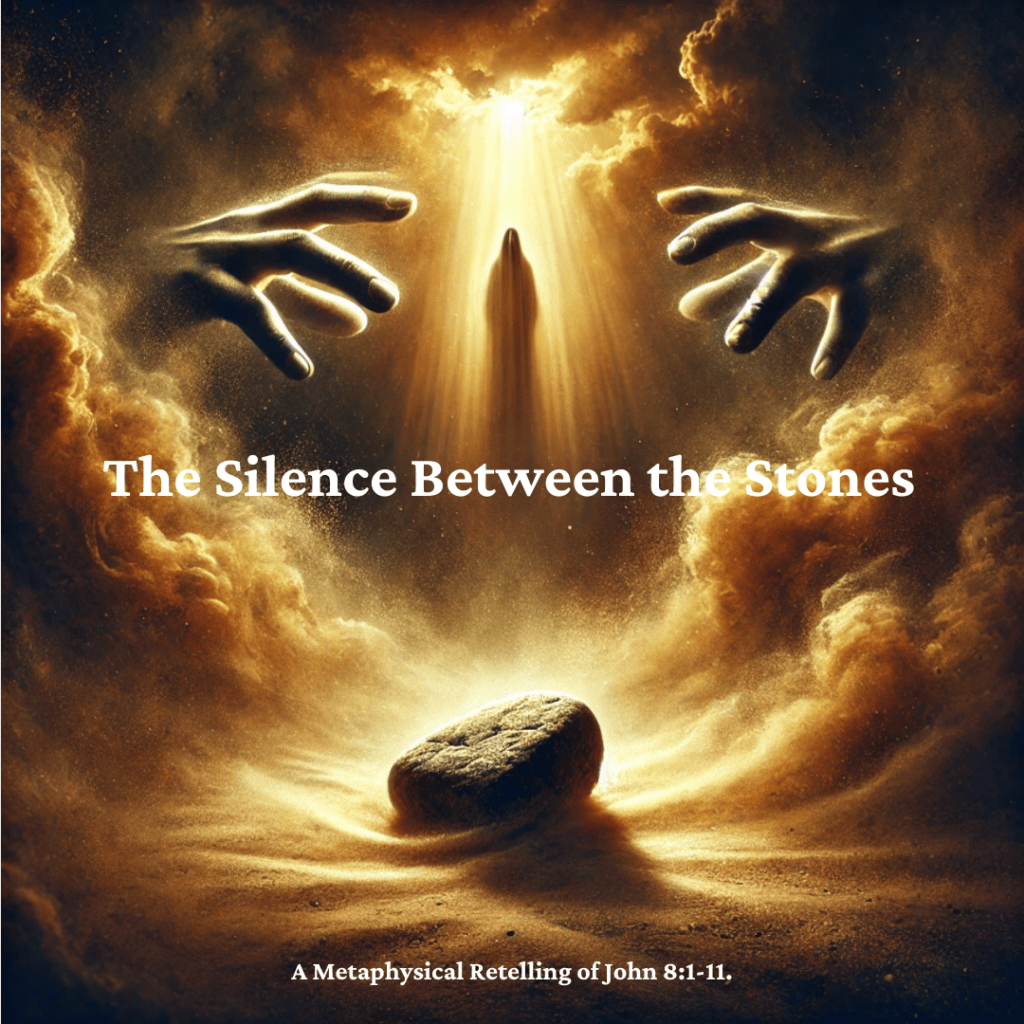
Metaphysical Premise: When Jesus encounters the woman caught in adultery, His words do not just change the moment — they alter the very structure of reality itself, rewriting guilt, judgment, and the nature of condemnation.
Concept Overview:
📖 Inspired by: John 8:1-11 (“Let him who is without sin cast the first stone.”)
💡 Metaphysical Premise:
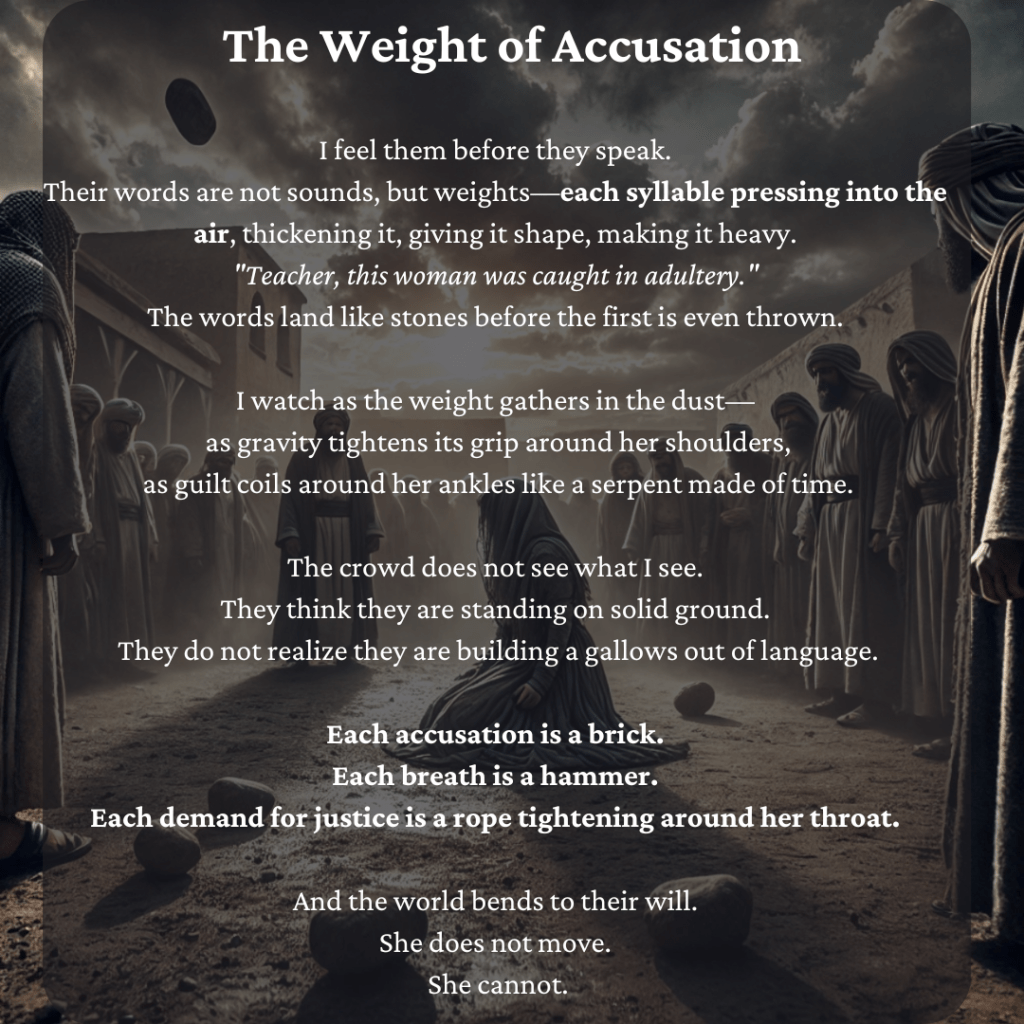
- The accusations of the Pharisees are not just words—they are weight, pressure, force.
- Every charge against the woman adds to the gravity of existence itself, pressing her toward the earth, forcing reality to confirm her guilt.
- The crowd does not realize it, but their words are shaping the universe, bending the fabric of being toward punishment.
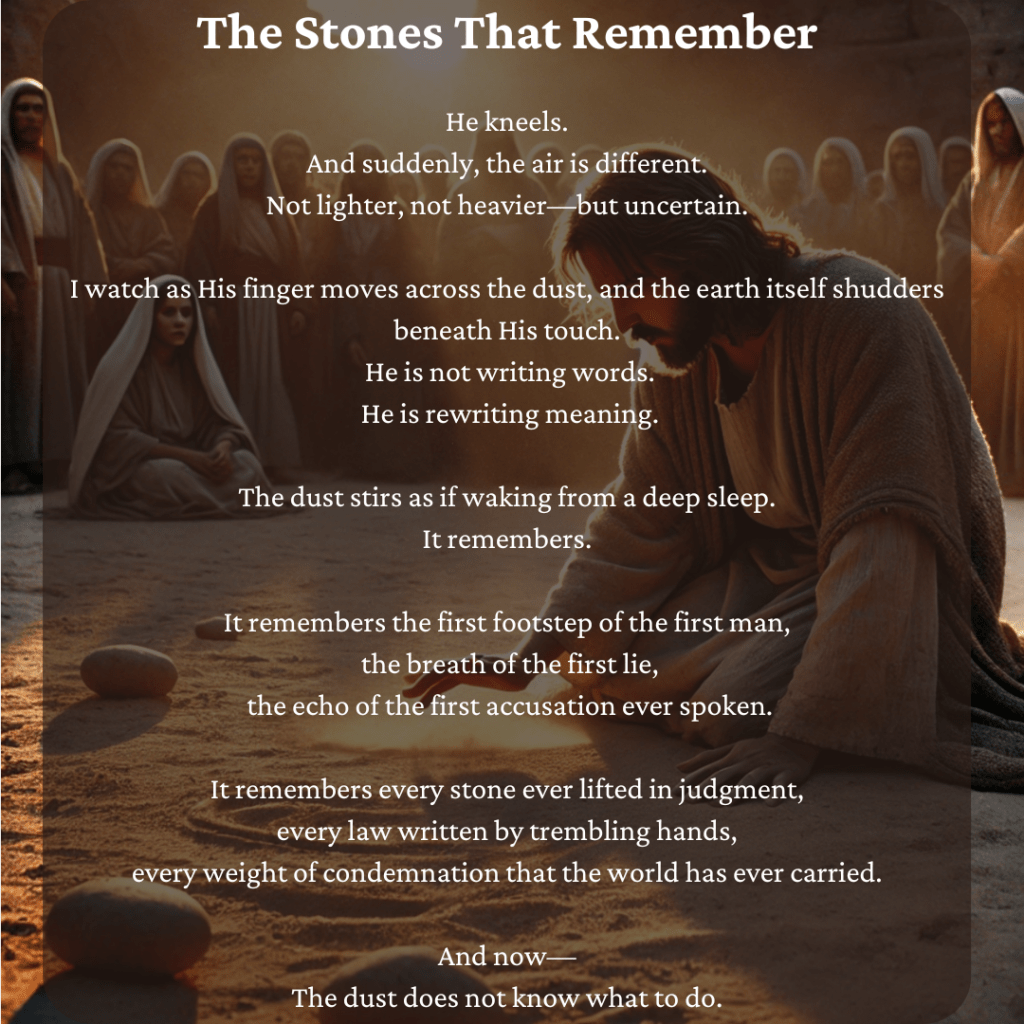
When Jesus kneels and writes in the dust, something shifts.
- The dust remembers.
- The ground itself recalls every footstep, every spoken law, every hidden sin.
- For a moment, the accusers feel something strange—an unbearable lightness.
- The stones in their hands suddenly feel uncertain—as if they do not belong in this reality anymore.
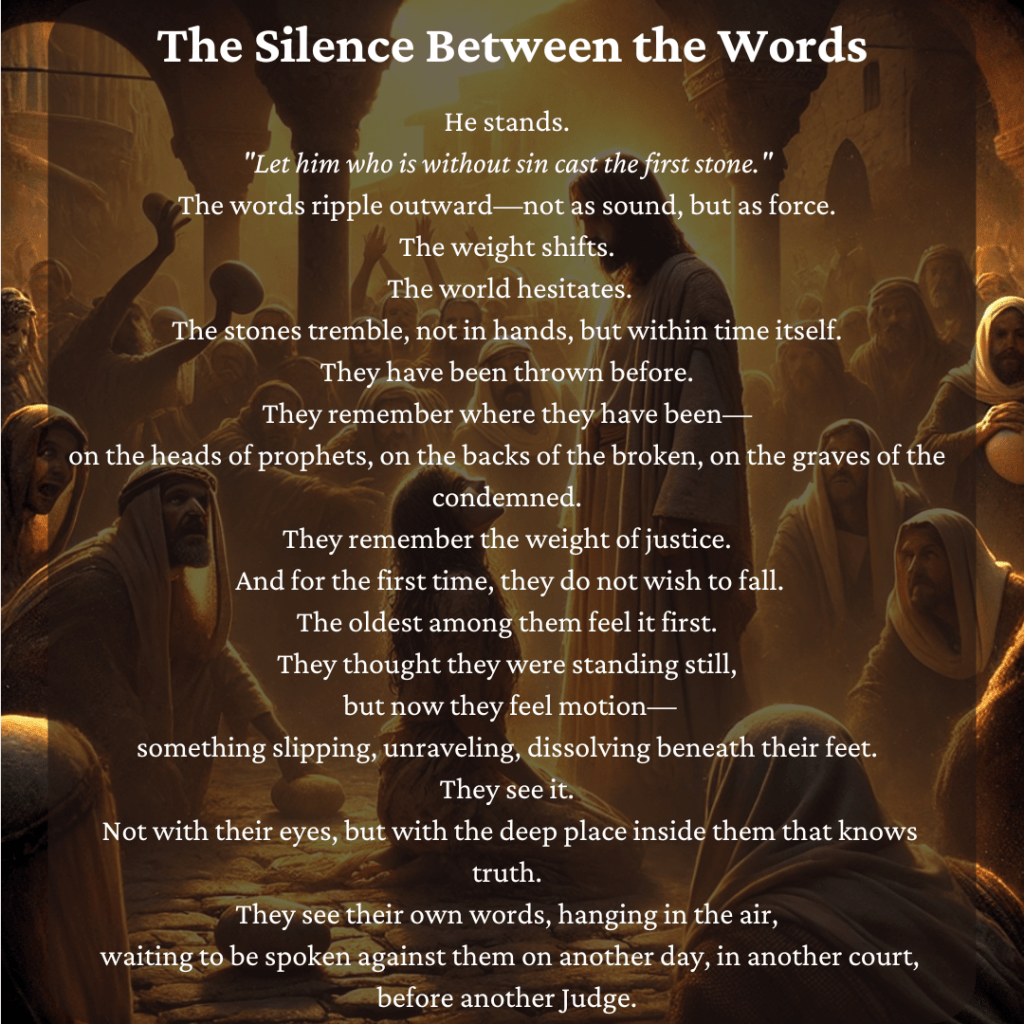
Then Jesus speaks.
“Let him who is without sin cast the first stone.”
And at that moment—
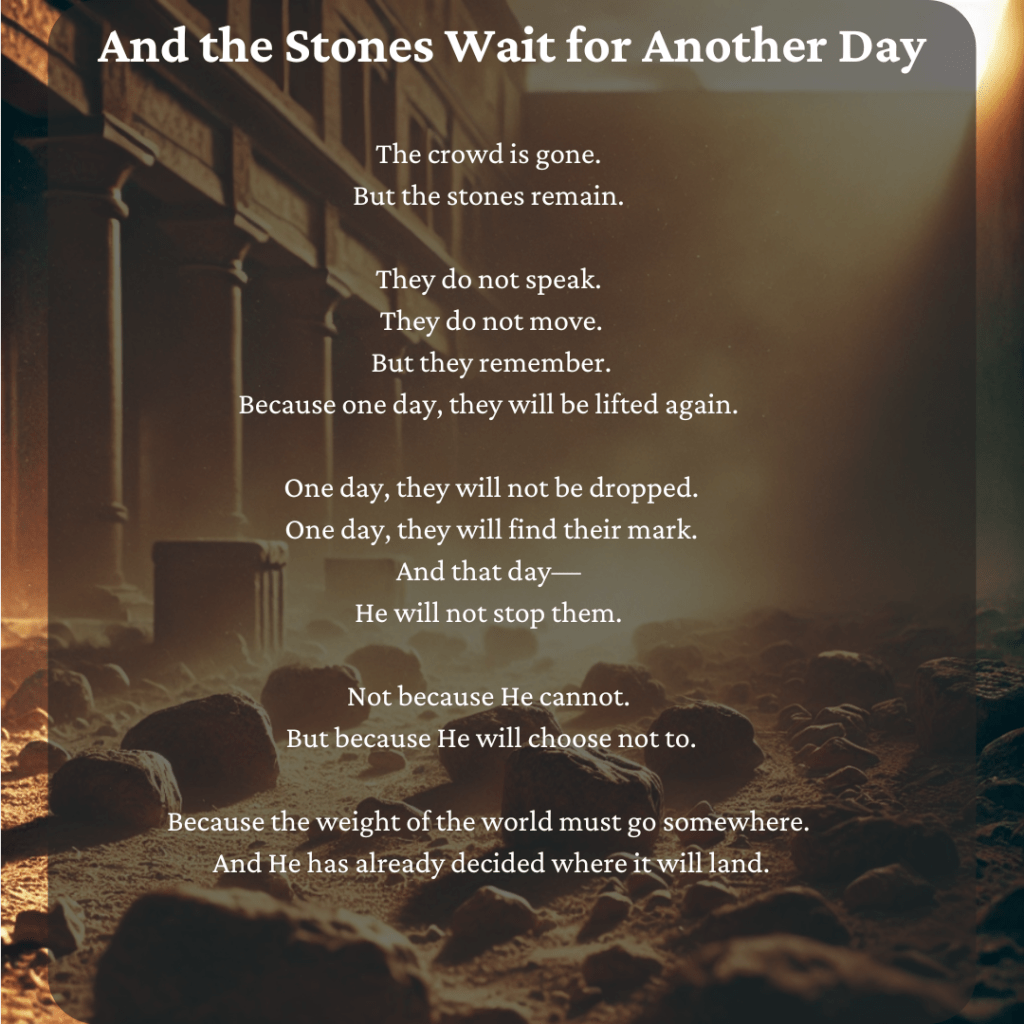
- The stones begin to tremble.
- They remember every time they have been used for judgment.
- They feel the weight of other executions, other stonings, other laws carried out in violence.
- They feel what it means to be the final period at the end of a human life.
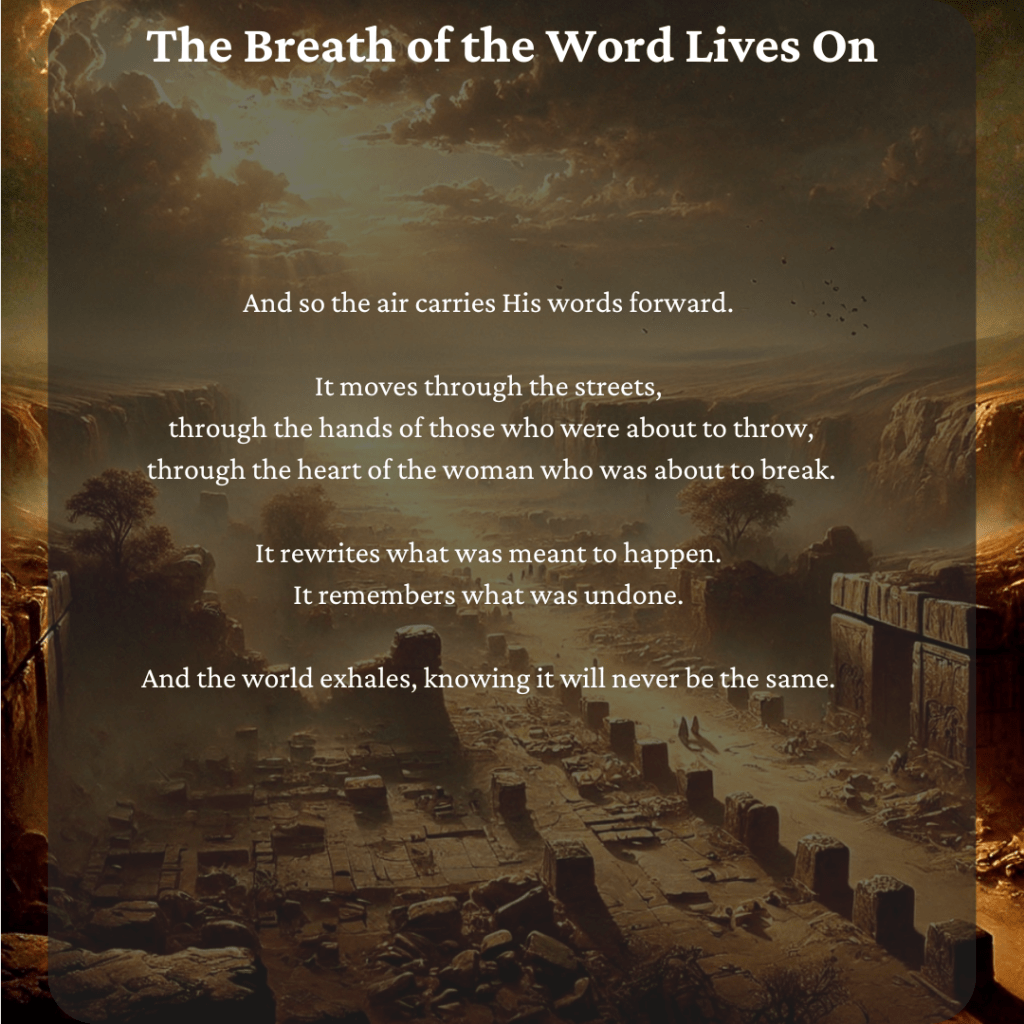
- Reality shifts.
- The oldest among them—those whose sins are woven deep into the past—feel it first.
- They see shadows of their own misdeeds, playing like echoes in the dust.
- They see their own stones waiting for them in another world, in another judgment, in another sentence not yet spoken.
- The weight of condemnation reverses, and suddenly they are the ones who feel exposed.
One by one, they drop their stones.
Not because they choose to—
But because in this new reality, they were never meant to hold them.
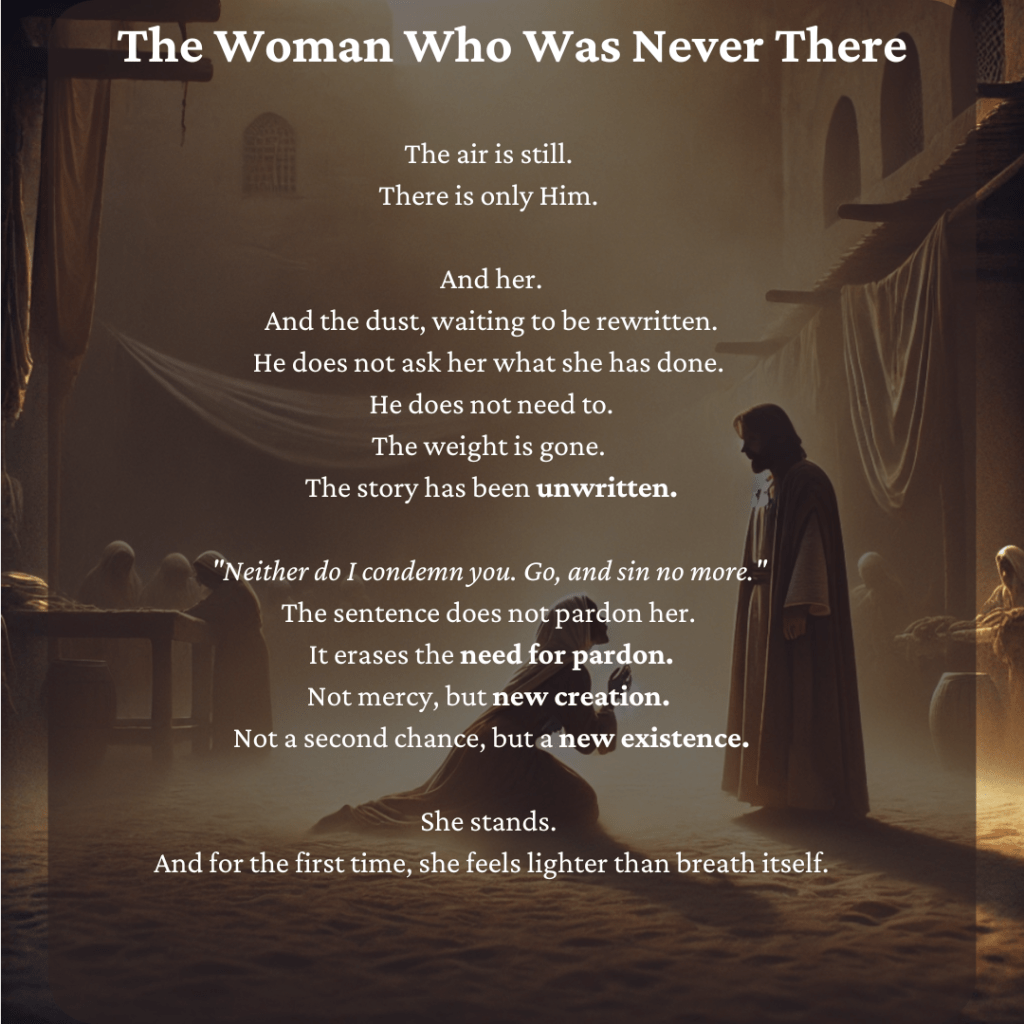
Jesus and the Woman: The Moment When Guilt Dissolves
The woman, still crouched on the ground, feels something strange.
- Moments ago, the air was thick with judgment—pressing down, solidifying her fate.
- But now—it is empty.
She realizes that if words have power, then silence must, too.
Jesus does not ask if she is guilty.
He does not need to.
Guilt is a construct, a thread woven into the past.
And with a few words, He has severed it.
“Neither do I condemn you. Go, and sin no more.”
The sentence is not just forgiveness—it is erasure.
Not a pardon, but a rewriting.
Not mercy, but new creation.
She stands up.
And for the first time, she feels lighter than breath itself.
Why This Story Works for “The Breath of the Word”
✅ Words Shape Reality – The accusations create weight, and Jesus’ words dissolve it.
✅ Time & Judgment Collapse – The crowd glimpses their own sins, their own trials, their own fates, and the future changes because of it.
✅ Forgiveness Is More Than an Act—It’s a Metaphysical Shift – The woman does not just leave forgiven—she leaves as if she had never been guilty at all.
 Social Scholarly