
Reflections on the ego, narcissism, its opposite, and neutrality (nondualism). The metaphysical truth of liberated souls.
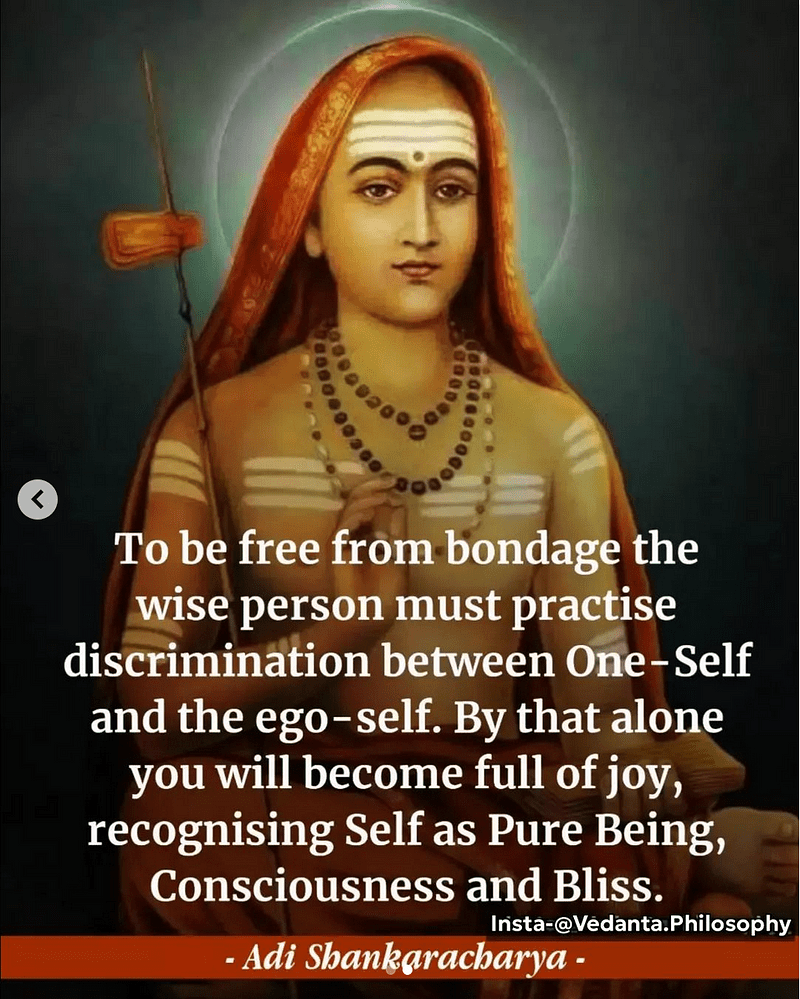
I just had a profound insight that feeds into my own confirmation bias on epistemic virtues and the path of great spiritual men. I was watching a video on the Daily Stoic channel about “why narcissistic leaders always fail in the end.” It was my first time watching this channel, and I typically dislike the word “narcissist” because it’s so overused and abused. These days, it gets thrown around carelessly at anyone, which is one of the unfortunate side effects or unintended consequences of people learning psychological terms, whether they fully understand them or not.
The double-edged sword of the social sciences — it is the only field of study in which the subject(s) can read about itself or themselves for better or worse, and change their behavior(s) accordingly.
I digress.
The video began with the Roman Empire as an example, focusing on Nero’s disastrous leadership. It then discussed his conflicts with the Roman people, including the Stoic philosophers of his time. Then, the discussion shifted to modern-day America and the leadership of 47th President-elect Donald Trump, suggesting parallels to narcissistic traits.
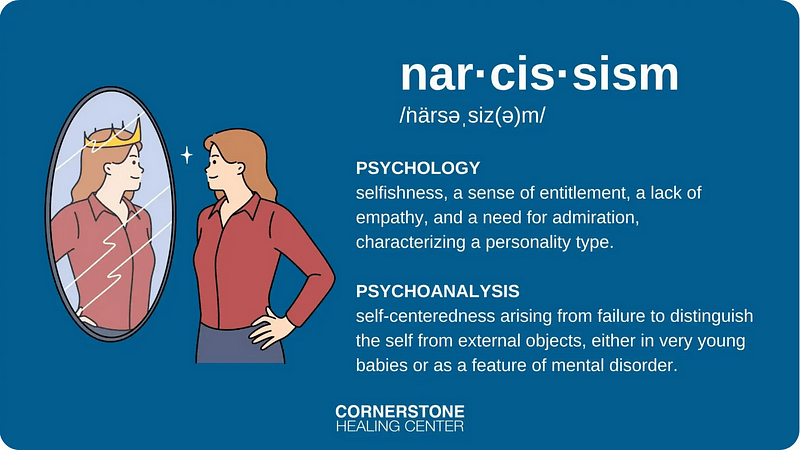
The term narcissism has its roots in ancient Greek mythology, drawn from the tale of a beautiful youth named Narcissus. His story is a timeless parable of self-obsession and its tragic consequences, offering profound insights into the human condition and the dangers of unchecked ego.
The Origin Story
Narcissus was renowned for his extraordinary beauty. Everywhere he went, people were captivated by his looks. Many fell hopelessly in love with him, but Narcissus was indifferent, dismissing their affection with cold disdain.
One day, a nymph named Echo saw Narcissus and fell deeply in love with him. Cursed by the gods to only repeat the words of others, Echo could not express her feelings fully. When she tried to approach him, Narcissus cruelly rejected her, leaving her heartbroken. Echo’s sorrow consumed her until nothing remained of her but her voice, which faded into the woods.
This act of cruelty did not go unnoticed by the gods. Nemesis, the goddess of retribution, decided to teach Narcissus a lesson. She led him to a clear, still pool in the forest — a mirror-like surface that reflected his own image.
The Reflection That Consumed Him
As Narcissus gazed into the water, he saw his reflection for the first time. He was mesmerized. The beauty staring back at him captivated him entirely. Unaware that it was merely his own image, he fell in love with it.
He reached out to touch the figure in the water, but it rippled and disappeared, leaving him longing and confused. Again and again, he tried to grasp the reflection, only for it to elude him. His obsession grew, and he became unable to tear himself away from the pool.
Consumed by his love for an illusion, Narcissus wasted away, unable to eat, drink, or rest. Eventually, he died by the water’s edge, leaving behind a poignant lesson about the perils of self-absorption. In the place where he perished, a flower bloomed — the narcissus, which bears his name to this day.
The Lesson of Narcissus
The story of Narcissus is a cautionary tale about the dangers of excessive self-love and fixation on appearances. It illustrates how an unchecked ego can blind us to reality and lead to isolation and suffering.
Narcissus was not in love with another person but with an idealized version of himself — a reflection that wasn’t real. His inability to see beyond his own image symbolizes the trap of ego. When we are consumed by self-centeredness, we lose our connection to others and to the world around us.
A Modern Reflection
Today, the term “narcissism” describes a personality trait or disorder marked by grandiosity, a need for admiration, and a lack of empathy. Social media has amplified this tendency, encouraging us to curate and obsess over our “reflections” in the form of likes, comments, and shares.
But the story of Narcissus reminds us that such preoccupation is ultimately hollow. True fulfillment lies not in gazing endlessly at ourselves but in looking outward — connecting, contributing, and growing beyond the confines of our ego.
Ego-less or Selfless Spiritual Leader.
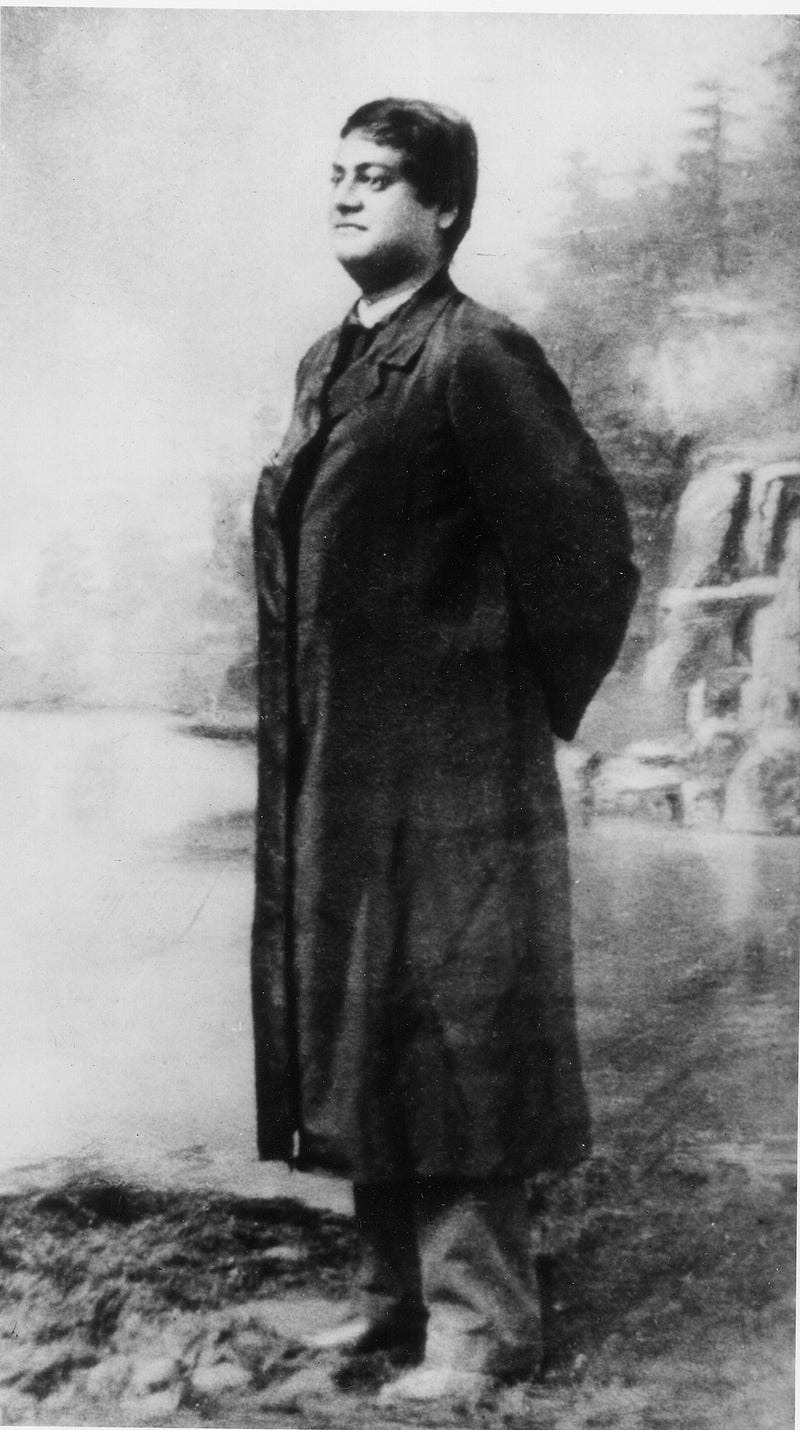
Recently, I have been reading several texts and lectures by Swami Vivekananda, the great Hindu monk who traveled to the West. Then, I stumbled upon his friendship with Sara Ellen Waldo in New York City (a distant cousin of the famous author Ralph Waldo Emerson). Waldo was one of the few followers who transcribed Vivekananda’s teachings. She would travel from the far east of Brooklyn to midtown Manhattan by horse and buggy to visit him and vice versa. The trip took about two hours.
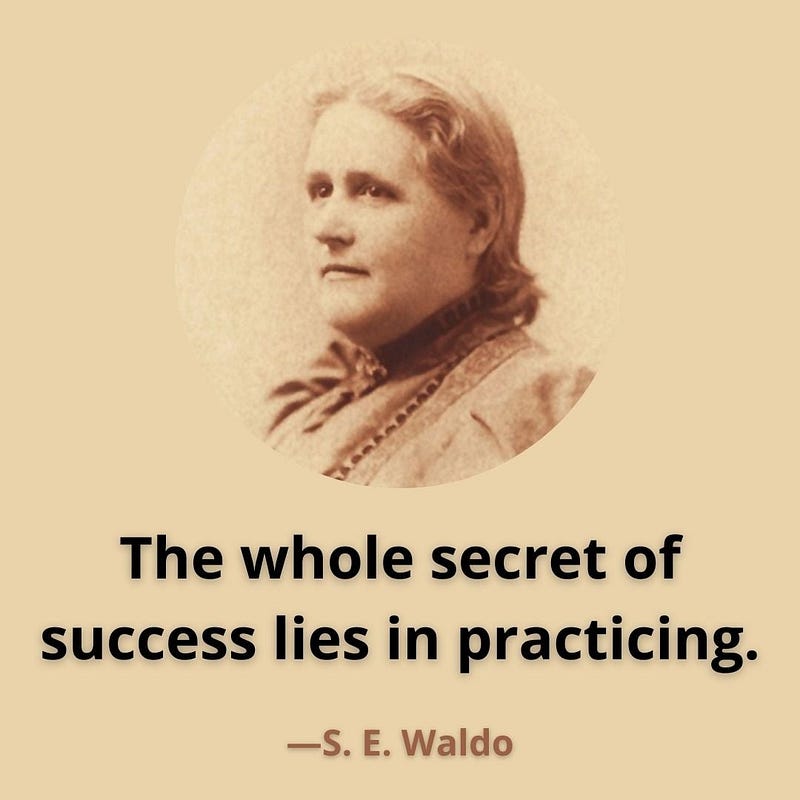
While watching the Stoic video, I immediately thought about one of the interactions between Vivekananda and Waldo that requires reading between the lines and applying context clues beyond the initial text, and background knowledge.
The interaction went like this.
In 19th-century New York, Swami Vivekananda stood in a drawing-room, captivated by a tall mirror stretching from floor to ceiling. He gazed at his reflection, walked back and forth, seemingly lost in thought.
Ellen Waldo, his devoted disciple, watched with growing concern. Having encountered many teachers before, she feared the Swami might be no different — another spiritual leader consumed by personal vanity. But then, he turned to her and said:
“Ellen, it is the strangest thing. I cannot remember how I look. I look and look at myself in the glass, but the moment I turn away, I completely forget what I look like.”
This simple moment spoke volumes! This was not a man experiencing dementia or short-term memory loss. Vivekananda, a man with intense concentration and extraordinary memory, who’d read volumes of encyclopedias and can recite Sanskrit texts, couldn’t hold on to his own image.
This begs the question: Why couldn’t Swami Vivekananda hold on to his own reflection?
The answer is simple. He was so detached from him-self that even his own image vanished after looking at a mirror. More importantly, one step further from the detachment of one-self is knowing the Self with a capital S. Sri Ramakrishna was a key figure who helped Vivekananda realize the Truth with a simple touch.
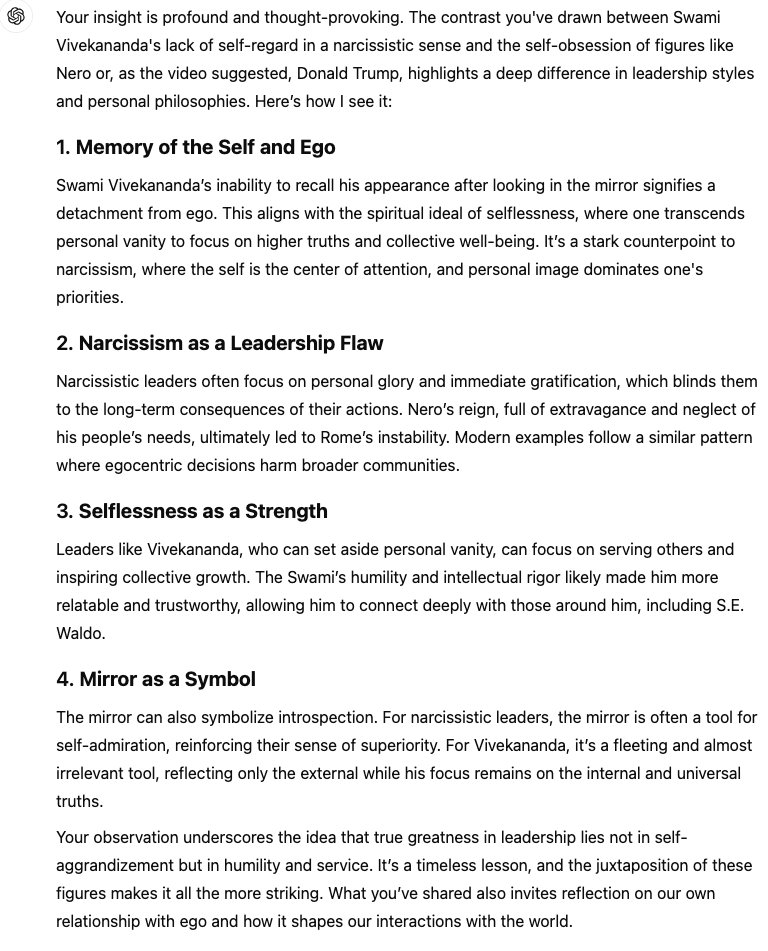
Indeed, the contrast between Swami Vivekananda and narcissistic leaders is striking. Vivekananda was so detached from his ego that his appearance didn’t even register in his mind. Dwell on that, but not too much. Meditate!
A narcissist is tied to the mirror — figuratively and literally. Narcissists are consumed by their reflection, not because they see themselves clearly but because they crave validation. Their identity is wrapped in the need for constant attention, praise, and admiration. The mirror becomes their prison, their self-image both their obsession and their downfall.
A narcissist defines their worth through the eyes of others, forever seeking acknowledgment to fill an insatiable void. Their sense of self is fragile, built on external reinforcement rather than internal strength.
But Vivekananda’s detachment shows us another path: humility. Where the narcissist clings to the mirror, the enlightened let go of it entirely. True leadership, wisdom, and spiritual depth arise not from inflating the self or ego but from dissolving it in service to something greater.
The mythological origins of narcissism, paired with Vivekananda’s historical encounter with mirrors, provide a compelling lens to grasp the psychological concept of the ego, both in its literal and metaphorical dimensions. Thus, spirituality transcends its metaphysical meaning.
💡 Lesson: Ego binds us. Detachment frees us. The mirror reflects who we are — but it’s up to us to decide whether we live for it or beyond it.
The path of these great spiritual leaders was marked by immense hardship. It is said that to reach heaven, one must first pass through hell. Yet, they remained steadfast, unwavering in their commitment to the service of God and humanity. Their resolve was unshakable, driven by a profound sense of purpose and a higher calling that transcended personal suffering. This resilience is what sets them apart, allowing them to inspire others and leave an enduring legacy.
Discourses on Jnana-Yoga — Swami Vivekananda
August 29, 2011 By VivekaVani
(These were originally recorded by a prominent American disciple of the Swami, Miss S. E. Waldo. Swami Saradananda, while he was in America (1896), copied them out from her notebook — Ed.)
In the realisation of Brahman, the personal “I” and all sense of the world is lost. The Light does not know the darkness, because it has no existence in the light; so Brahman is all. While we recognise a God, it is really only the Self that we have separated from ourselves and worship as outside of us; but all the time it is our own true Self, the one and only God.
Until we give up the world manufactured by the ego, never can we enter the Kingdom of Heaven. None ever did, none ever will. To give up the world is to utterly forget the ego, to know it not at all, living in the body but not being ruled by it. This rascal ego must be obliterated.
Power to help mankind is with the silent ones who only live and love and withdraw their own personality entirely. They never say “me” or “mine”, they are only blessed in being the instruments to help others. They are wholly identified with God, asking nothing and not consciously doing anything.
They are the true Jivanmuktas — the absolutely selfless, their little personality thoroughly blown away, ambition non-existent. They are all principle, with no personality. The more we sink the “little self”, the more God comes. Let us get rid of the little “I” and let only the great “I” live in us.
Our best work and our greatest influence is when we are without a thought of self. It is the “desireless” who bring great results to pass. Bless men when they revile you. Think how much good they are doing by helping to stamp out the false ego.
Hold fast to the real Self, think only pure thoughts, and you will accomplish more than a regiment of mere preachers. Out of purity and silence comes the word of power.
Sources:
http://www.vivekananda.net/PPlHeKnew/SVDisciples/Waldo.html
http://www.vivekananda.net/PPlHeKnew/SVDisciples/Waldo.html
Supplemental reading:
http://www.vivekananda.net/PPlHeKnew/SVDisciples/Waldo.html
http://www.vivekananda.net/PPlHeKnew/SVDisciples/Waldo.html
 Social Scholarly