
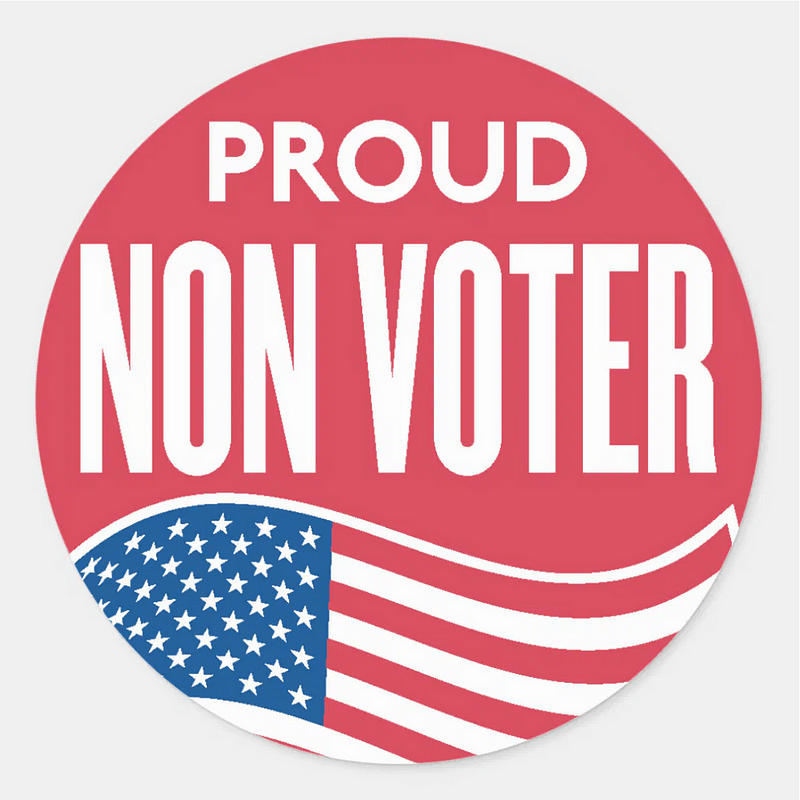
In almost every election cycle, the Democratic Party or its supporters love to blame nonvoters for their election losses. Despite other factors contributing to their defeat, I can already predict they’ll point fingers at nonvoters again. I voted for the first time in 2020, despite being eligible in 2016, and yes, it was for the Democratic candidate. The main reason was for the experience, and second, not to see former President Donald Trump hold power again at the highest seat in the United States government.
According to the Pew Research Center, the 2018, 2020, and 2022 U.S. elections saw some of the highest voter turnouts in decades, with 2020 reaching the highest rate since 1900, and both the 2018 and 2022 midterms exceeding turnout levels not seen since the early 20th century. In 2024, I did not and will never vote again from now on. I have been and will remain a nonvoter unless something profoundly changes to compel me to cast my vote. During this presidential election cycle, I simply did not care and became more cynical and detached from the political process because of the direction the country was heading, and not that I was ever politically involved.
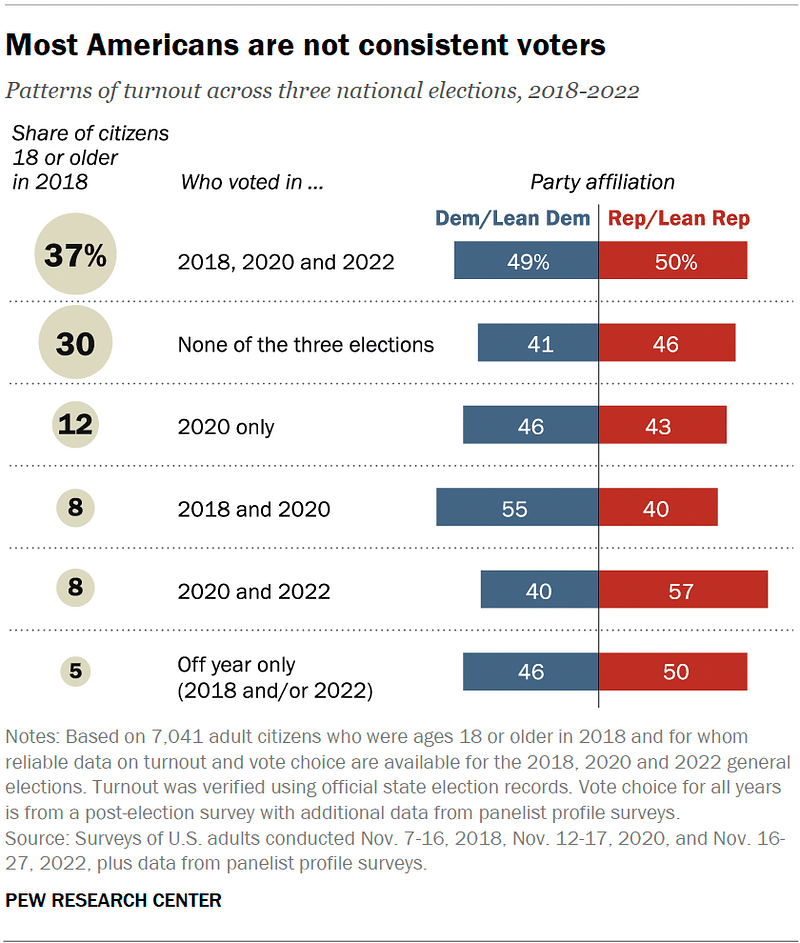
The 100 Million Project is aimed at understanding the perspectives and behaviors of approximately 100 million eligible American non-voters — a group comprising roughly 43% of eligible citizens as of 2016. This means that the largest citizens in our presidential elections are not those who vote for one candidate or another, but those who do not participate at all. Non-voters are the largest cohort!
Their findings stated that non-voters often feel disconnected from the political process, citing distrust in the electoral system, disinterest in the candidates, or a sense that their vote wouldn’t make a difference. In addition, the survey revealed that non-voters are generally less engaged with political news, with many saying they only “bump into” news rather than actively seeking it. Younger non-voters, in particular, often rely on social media and informal networks for information, which can foster further disengagement from the electoral process.
In contrast to the typical 100 Million Project non-voters’ profile, I actively seek out news and consider myself moderately to very well-informed on political issues. I do mostly rely on social media for news, but I also engage with established news as well since much of their post are visible on social media apart from independent media and regular citizens sharing their views and stories. The survey’s findings on distrust in the electoral system and feeling disconnected from the political process resonate with my own experience, so it seems largely accurate, though not a one-size-fits-all portrayal of non-voters. I wonder how many non-voters are even aware that they actually make up a “hidden majority” — a fact I only learned recently.
Early in my academic journey studying social science, I was deeply committed to addressing the flaws in our economic system, or at least rectifying some imbalances, and somehow stumbled into overhauling capital markets when I joined an online social movement.
I studied social inequality, and I felt a strong drive to support the “lost Einsteins” — those brilliant minds who either chose security over risk or were held back by circumstances that stifled their potential, and it was often due to the community they grew up in. It mattered to me that people with transformative ideas had opportunities to thrive, regardless of their backgrounds or environments, and were not beholden to their financial conditions.
Both major parties have consistently failed to solve the extreme economic disparity, the loss of purchasing power of the US dollar, and create an ideal environment for equal opportunity because they were often too busy catering to and bending to the will of institutions, corporations, and elites instead. It makes sense because that is where the money is.
Instead of investing in future generations by directing resources toward impoverished communities, the construction of new homes, and investing heavily in education, taxpayers’ money, savings, and investments were funneled into the S&P 500, offshore accounts in the Cayman Islands, and looted into Wall Street’s pockets. It’s an observation that I fully stand by, where real reform remains elusive while the same power structures benefit. American taxpayers are left holding the bag, watching their hard-earned paychecks chipped away by taxes and inflation, while the ultra-wealthy (not all of them) stash their fortunes into shell companies, offshore accounts, or Swiss Banks to avoid contributing their fair share.
Not to mention that fund managers are overjoyed over the carried interest loophole. This system of tax evasion leaves the average citizen bearing the weight of public costs, reinforcing the gap between regular workers and the elite who skillfully dodge the very taxes that fund essential services.
https://fastercapital.com/content/Offshore-banking–How-Hot-Money-Finds-its-Haven.html
https://www.npr.org/2022/08/12/1117305695/carried-interest-wormhole
The financial industry consisting of big banks, insurance companies, private equity firms, venture capital, hedge funds, brokerage firms, market makers, Fintech companies, etc., will vigorously lobby to protect its interests and bottom line, ensuring that it maintains control and keeps the advantage in its hands. This scenario played out vividly before, during, and after the 2008 financial crisis, showcasing blatant regulatory capture at every turn. It was a striking example of how financial institutions manipulated regulatory bodies to serve their own interests, evading accountability, and prioritizing profits over public welfare. The financial crisis not only exposed the depth of industry influence but also demonstrated how deeply regulators had been co-opted, paving the way for repeated patterns of unchecked corporate power.
Did you know that the financial industry is one of the few sectors that incorporates a high level of self-regulation? This is commonly referred to as Self-Regulated Organization or SRO for short, such as the NYSE and FINRA. The justification is often that experts are best to regulate these industries. On paper, it seems logical to have industry experts regulate the sectors they know best. However, in practice, this often opens the door to regulatory capture, where regulators prioritize industry interests over public welfare, blurring the lines between oversight and influence.
There is often a close intertwining of the industry with the very regulatory bodies tasked with overseeing it. This “revolving door” phenomenon allows individuals to move between roles in regulatory agencies and industry positions, creating potential conflicts of interest that can compromise regulatory effectiveness. Small folks and independent organizations stand little to no chance to out-lobby big corporations.
The infamous white-collar criminal Bernie Madoff is a great example of someone who was deeply involved with the very institutional watchdogs that oversaw him. Madoff held prominent roles in financial institutions, including serving as the chairman of the NASDAQ. He even came close to becoming the chair of the Securities and Exchange Commission (SEC) — the government agency responsible for regulating and overseeing the securities industry. He gained influence and respect, which helped him conceal his extensive Ponzi scheme for years.
Thus, rather than maintaining strict oversight, regulators may become sympathetic to industry perspectives or influenced by lobbying, undermining impartiality and accountability. This is why SROs and our political systems are deeply flawed: they’re riddled with loopholes and vulnerable to compromise or corruption.
Journalist and author Chris Hedges, influenced by other critical thinkers, coined the term “corporate coup d’état” to capture this phenomenon, particularly in his book America: The Farewell Tour. His concept describes the takeover of democratic institutions by corporate powers, vividly capturing the deep entrenchment of corporate influence in American society. He uses the phrase to describe how corporations have systematically taken control of political and economic power in the U.S., weakening democratic institutions and prioritizing corporate interests over public welfare.
Chris Hedges emerged as a powerful voice in the Occupy Wall Street movement (2011), exposing the entrenched corporate corruption that permeates the nation. Through his writing and activism, he exposed how corporate interests hijack democracy and exploit society, fueling inequality and eroding public trust in institutions meant to serve the people.
Former President Donald Trump may have promised to “drain the swamp,” but his administration’s appointment of former Goldman Sachs executives reveals a different reality, effectively refilling the swamp with insiders from Wall Street; the same entities that wrecked the economy and looted the US Treasury. In hiring Goldman Sachs alumni, he brought the financial powerhouse into government, solidifying its influence as the government’s unofficial “fourth branch” of government (a title now transferred to BlackRock) and perpetuating the revolving door he claimed to oppose.
Trump is smart enough to know the system is rigged against the American public. Yet, as a businessman himself, growing up in real estate and then veering off to try other capitalistic ventures, that’s the only language he understands. Anything outside of it is difficult for him to grasp, or his mind actively dismisses it as a defense mechanism to keep control and power of the empire he built. Trump isn’t all that stupid as many on the left may claim, and he may have a more-than-average IQ, he is simply malformed in a lot of areas. Yet, somehow that sounds like a backhanded way of calling him an idiot. The nostalgic past he loved and wants back is long gone, and his solutions are too outdated, dull, and inadequate to work in the modern world.
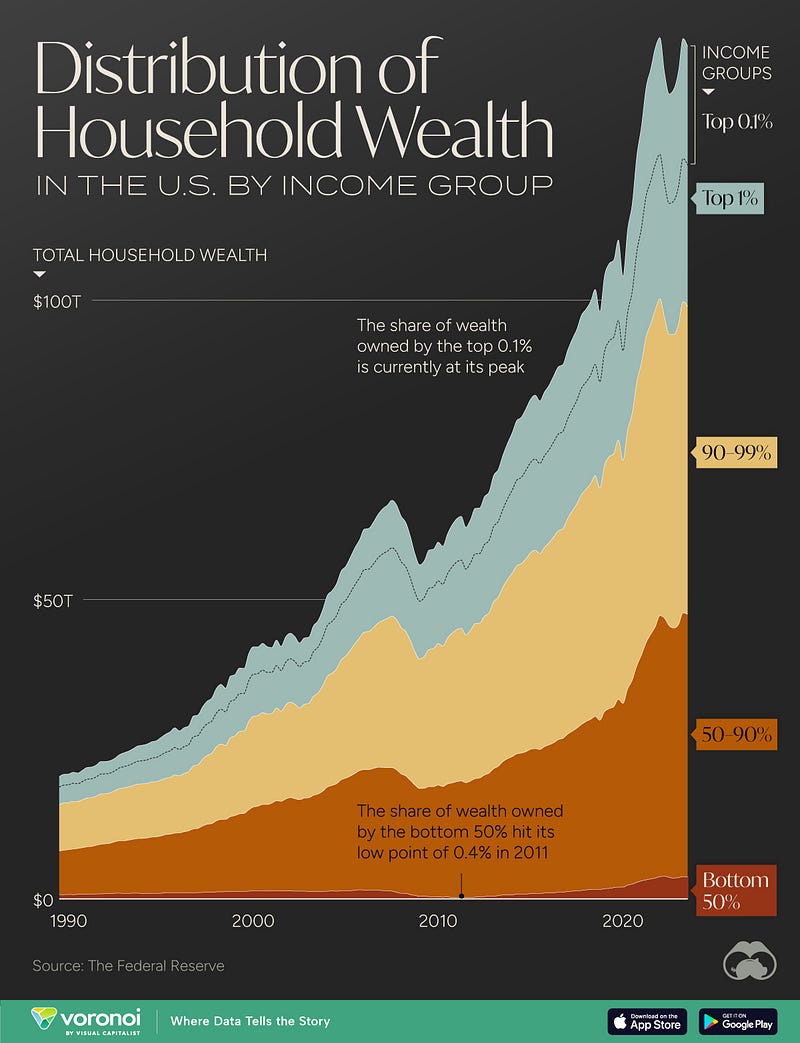
The ultra-wealthy — the top 1%, or even the 0.1% — are incentivized and have unlimited resources at their disposal to control the American political process to protect and expand their wealth. Similarly, corporations are driven to tighten their grip on market share and expand their influence, consolidating power to serve their own interests. This pursuit of dominance isn’t just about profits, it’s about securing control over industries and policies, allowing corporations to shape markets and decisions according to their agenda.
The glaring wealth disparity in the US is nothing short of disgusting, a stark reflection of an economic system that ensures and rewards the few while leaving the many lagging far, far behind. America, along with much of the world, prioritizes its corporations and institutions, often granting them rights and protections typically reserved for individuals, and investing heavily for their future or to keep them afloat, whether through capital injections or safeguarding them from failure. When they say “too big to fail,” they’re really saying that the idea of letting big banks or giant companies collapse is simply too frightening. The fear of economic fallout, job losses, and market chaos leads to rescuing these institutions, no matter the cost to public funds.
The last time America saw such extreme economic inequality was during the Gilded Age. During this period, wealth was heavily concentrated among a small elite of industrialists and financiers, while the majority of the population, including laborers and immigrants, lived in poverty or near-poverty conditions. This disparity was exacerbated by minimal labor rights, exploitative working conditions, and little to no social safety nets. Donald Trump’s trade war with China and tariffs in general, does little to address our core economic problems, and his vision of returning to a so-called “golden age” for America, nostalgic for the Gilded Age, doesn’t sit well with me. While the period was marked by significant innovation and wealth generation, it is important to remember that much of this wealth was also built upon exploitative labor, including child labor, which is indicative of both the positive and negative aspects of the Guilded Age.
In a 1906 Cosmopolitan article, a Native American chieftain was asked what he remembered most upon visiting New York City. He replied, “Little children working” after observing the city’s contrasts of wealth and poverty. Therefore, the tariffs approach ignores the deeper systemic issues that need attention and is not the solution. Trump instead romanticizes an era marked by vast wealth gaps and unchecked corporate power, which only exacerbates wealth inequality rather than solving it.
It took the great spiritual leader Swami Vivekananda, who traveled to the United States and gave his famous 1893 World’s Parliament of Religion speech, to soften the heart of the titan industrialist John D. Rockefeller to become more charitable with his accumulated wealth. Hence, a little secret history of how the Rockefeller Foundation was founded that is not provided on their own website.
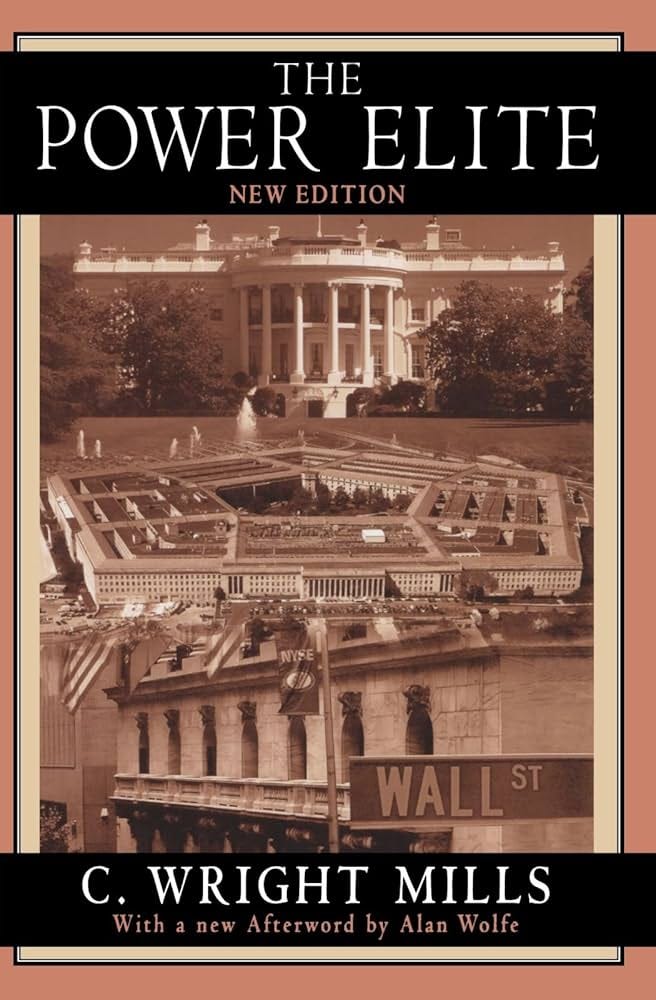
Powerful corporations and government institutions are woven so deeply into the fabric of society that if you’re not part of the system, you’re left to fend for yourself. The Power Elite, to borrow from the Sociologist C. Wright Mills, commands the full support of the State to uphold an exclusive monopoly on violence, using this authority to consolidate its position and suppress opposition where needed.
Sociologist Heather Gautney of Fordham University in her book, The New Power Elite, updated Mills’ thesis for the 21st century, revealing the high-level decision-makers of our own time and explaining how ordinary people are excluded from power. In a world where corporate interests reign supreme, those outside the inner circle face an uphill battle for security, representation, and opportunity. Become a dissident to the supreme new world order and you will face massive backlash by the powers that be and even working people, as well as being at risk of your own life.
As we moved away from the enduring and toxic ideology of white supremacy — an ideology deeply rooted in colonial history, leaving most but not all of it behind in the 20th century, we found ourselves heading straight into the grasp of corporate supremacy, which has discreetly asserted its dominance over the world in the 21st century. The stock market never accurately reflects or represents the true health of the broader economy. In the last two decades, the market has turned parasitic, better at extracting wealth instead of generating real value.
WELCOME TO CORPORATE AMERICA INC., MADE IN CHINA — I mean, Mexico…
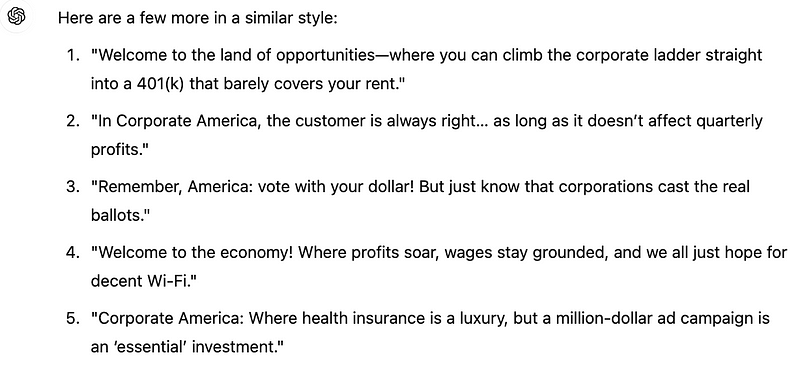
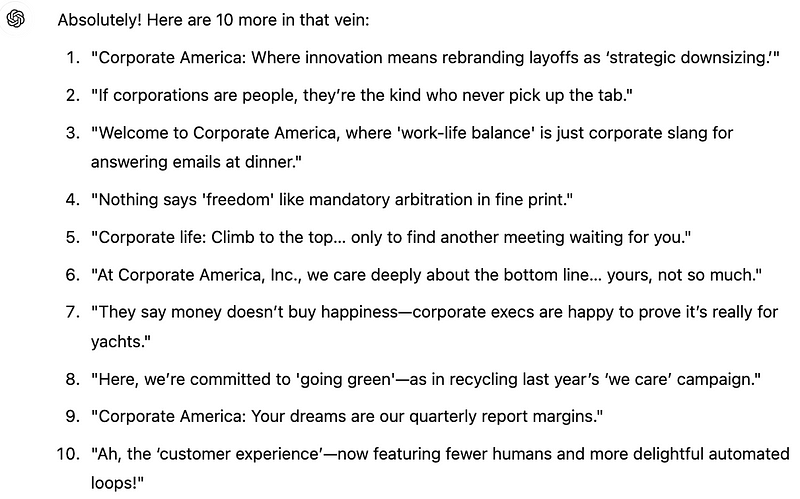
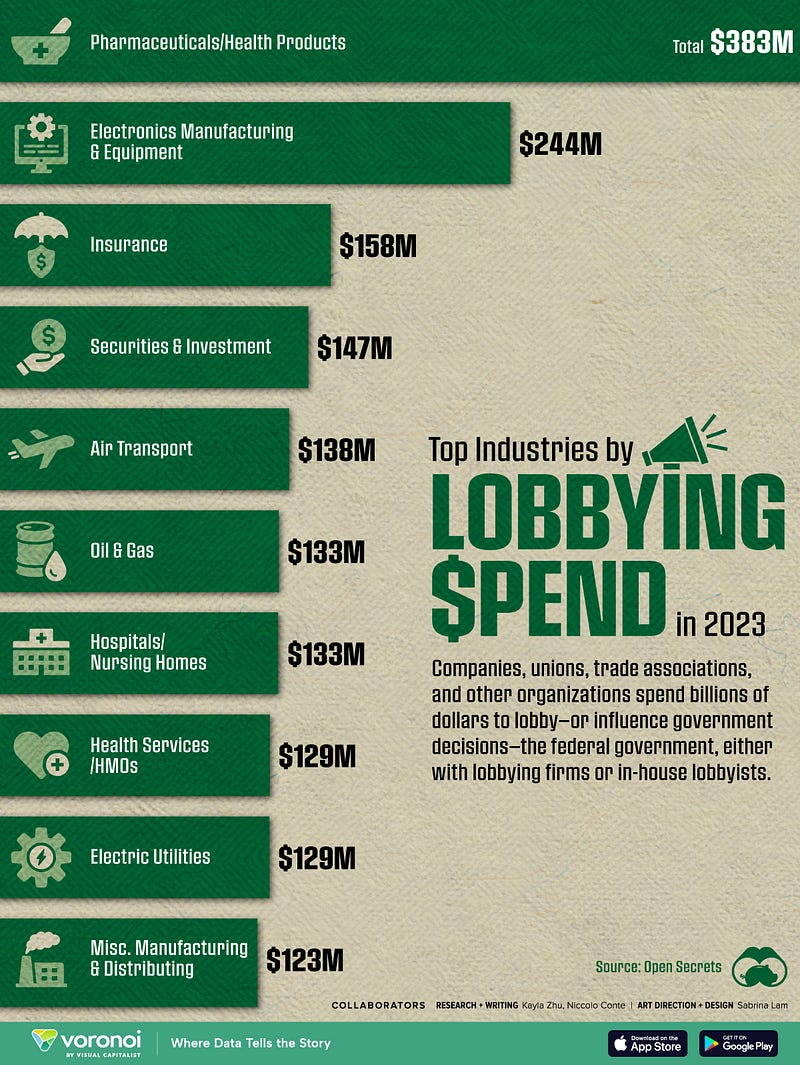
Special interest groups, including unions, often claim to represent the interests of the average worker, but they sometimes prioritize their own agendas over genuine worker advocacy. Unions can become insular, focusing more on preserving their influence and power rather than adapting to the changing needs of their members. At times, they negotiate in ways that prioritize job security for existing members at the expense of newer workers or broader economic flexibility, which can stifle innovation and competitiveness. Although they play an essential role in protecting workers’ rights, unions can sometimes act like corporate entities themselves, more interested in dues and political clout than in driving meaningful change for all workers. Lobbying expenditures hit a record $4.3 billion, reflecting the influence of sectors like healthcare, electronics, and finance on policy.
On top of that, both right-leaning and especially left-leaning economists seem disconnected from the economic realities on the ground. One side insists the sky is falling, dismissing data as misleading, while the other claims those same numbers show progress. Meanwhile, much of the American public remains woefully uninformed about critical economic and financial issues. Even academics often challenge me on topics like the minimum wage, offering arguments that lack both clarity and persuasive evidence in favor of it. I’m against the minimum wage law, but for workers’ rights and protection within their industry or institution. This disconnect between economists, academics, and the real-world economy leaves people feeling misunderstood and inadequately informed.
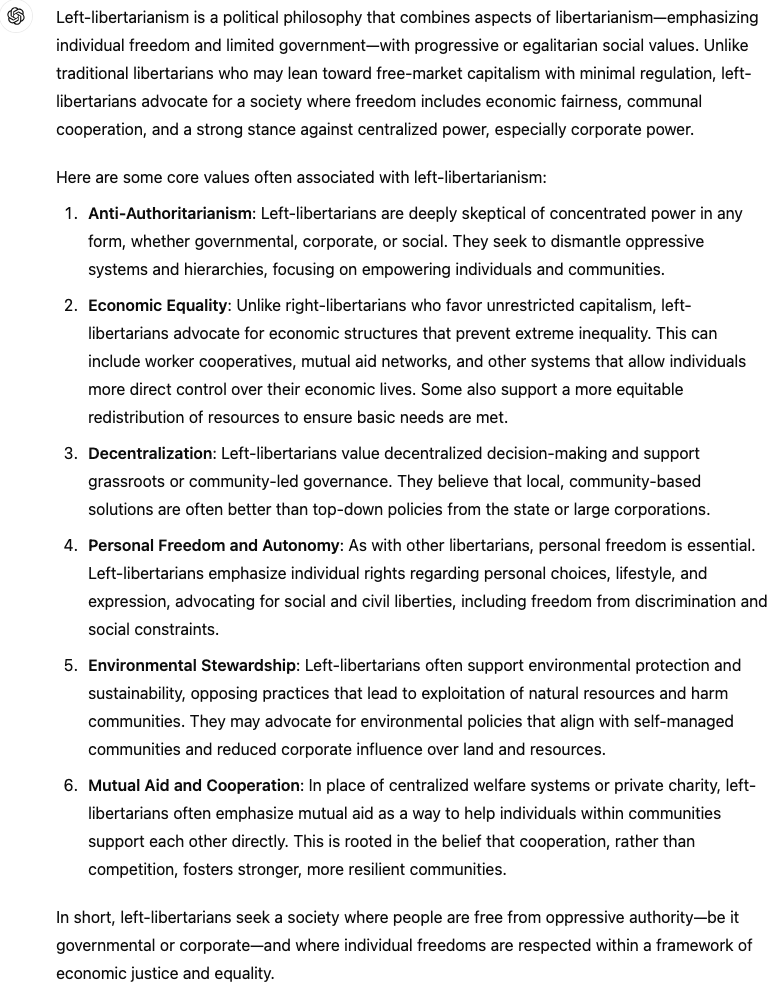
In my view, most well-known libertarians like Argentina’s President Javier Milei or Billionaire Peter Thiel tend to be either right-libertarians or extreme libertarians. I, on the other hand, am a libertarian who advocates for a social safety net and commends and sometimes attempts to synthesize all political views. It doesn’t make me holier than thou, although I want everyone to win and do away with needless suffering that often is self-inflicting at the structural and policy level.
The Libertarian Party has historically received a small percentage of the vote in U.S. presidential elections. Their highest share came in 2016 when Gary Johnson, the Libertarian candidate, received about 3.3% of the vote. But I don’t take these political labels too seriously. If anything, the U.S. is the epitome of pro wrestling (WWE) because Americans are hooked on chaos and spectacle above all else.
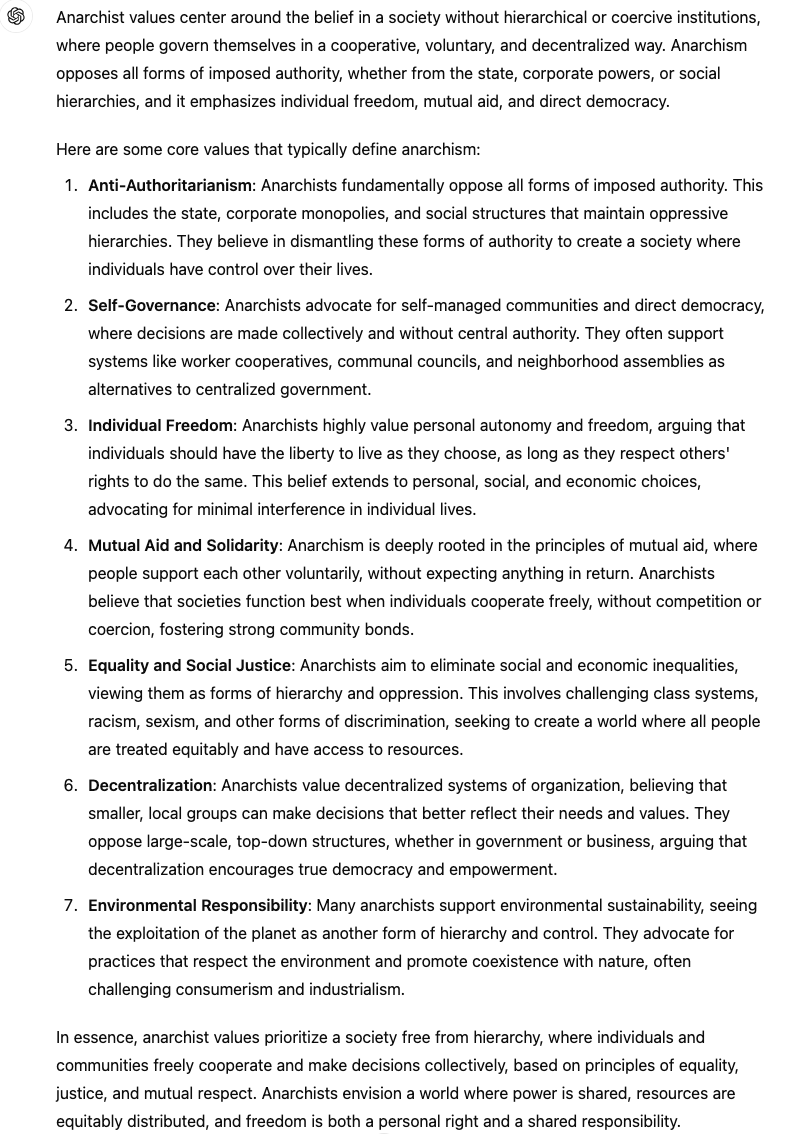
Despite facing overwhelming odds and a significant disadvantage, my resolve and that of many others remain unshaken as we continue to fight for the causes we believe in. We persist, even when the system seems stacked against us, because the issues we champion are worth the struggle, no matter how daunting the path. I’m a nonvoter not because I want to be cool or different. I’ve had a disdain for politicians, especially sly ones, since a young age, resorting to looking for dead presidents to represent me, to quote NYC rapper Nas.
I’m a nonvoter because I’ve been left behind by a system that no longer and never represented me. Who can win against a system that chooses corporate interest over real people, over individuals who can get easily swallowed whole by Goliath? But that won’t stop me as I will continue marching forward, determined to create change outside the confines of a broken political and economic system. I refuse to be let down any longer by the empty promises and overblown rhetoric of our politicians. Their broken words have lost all credibility, and I won’t be fooled by their political theatrics any longer.
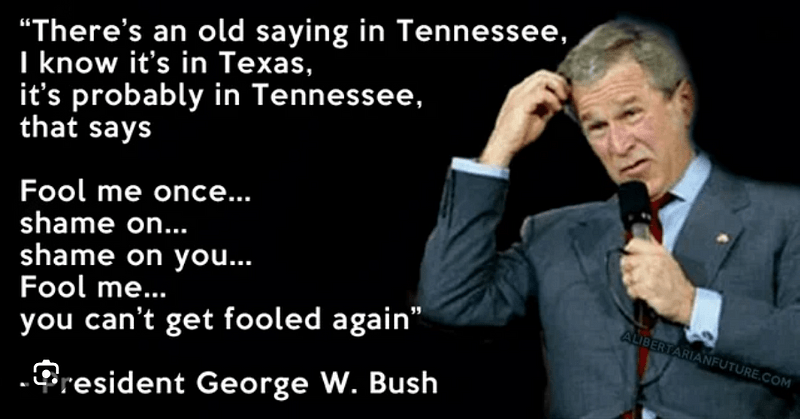
Politicians’ and pundits’ idiocy, and the American idiocracy, notwithstanding, is unbearable, destructive, and a danger to our way of life. Many of their actions are inexcusable: Vietnam, Cuba, Iraq, Afghanistan, bank bailouts, the list goes on. In the wise words of former President George W. Bush, “Fool me once, shame on… shame on you. Fool me — you can’t get fooled again.”
Recommended sources:
https://www.npr.org/2022/08/12/1117305695/carried-interest-wormhole
 Social Scholarly