
A great classic video lesson from 2021 by Professor Wes Cecil remains relevant today, highlighting issues not just with Jordan Peterson, but with several popular pundits on social media in general with a massive following. When I first listened to Wes Cecil’s critique of Jordan Peterson back in 2021, I realized we shared similar perspectives and I aspire to that level of clear thinking. Regardless of how articulate someone sounds, how sophisticated their language is, or even their credentials, it’s important to critically examine their assumptions, claims, and beliefs with clear thinking and concise questioning.
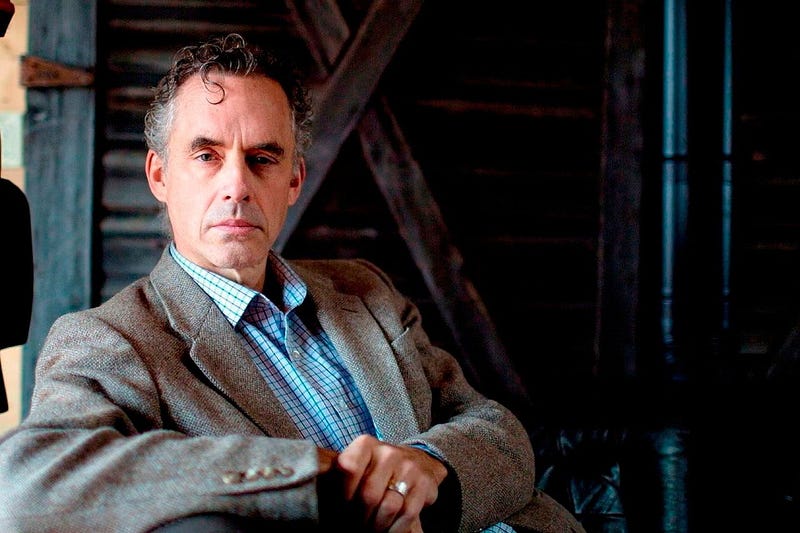
One of Jordan Peterson’s claims that Wes Cecil effectively challenged was the assertion, ‘You would have been a Nazi in Germany,’ which is a provocative statement, perhaps intentionally or unintentionally meant to stimulate thought. During the Nazi regime in Germany, the Jewish population experienced severe persecution and a significant decline due to the Holocaust. Before the Nazis came to power in 1933, the Jewish population in Germany was approximately 500,000, which was less than 1% of the total population. However, the Holocaust resulted in the deaths of approximately 6 million Jews across Europe, including the majority of the Jewish population in Germany.
Jordan Peterson’s assertion stems from deep philosophical and sociological thought, but not everyone would have been a Nazi just based on historical evidence. For example, Max Weber, the influential German sociologist, passed away in 1920, long before the rise of Nazi Germany. But, his widow, Marianne Weber, was an active figure during the Nazi era, and her views and actions provide insight into her stance during that time. Her career as a feminist public speaker ended in 1935 when Hitler dissolved the League of German Women’s Associations, a key organization that she had been involved with. Despite the oppressive political climate, Marianne Weber continued to host a weekly salon at her home. During these gatherings, discussions were often centered around philosophical, religious, and aesthetic topics, subtly implying criticisms of the Nazi regime without openly confronting it. This approach reflected her cautious resistance, acknowledging that she and her circle were not inclined to become martyrs.
Another person who certainly was not and wouldn’t be a Nazi, was the German-Jewish sociologist, Norbert Elias who fled Germany in 1933 due to the rise of the Nazis. His seminal work, “The Civilizing Process,” was published in 1939 while he was in exile. During the war, Elias was interned in the UK as an enemy alien but later worked with British intelligence, examining Nazi prisoners. His theories on long-term social processes and the dynamics of power and behavior have had a lasting influence on sociology.
ChatGPT:
In addition to Norbert Elias and Marianne Weber, several other prominent sociologists were active during the Nazi regime and World War II, each with distinct roles and stances:
1. Ferdinand Tönnies: Known for his work “Gemeinschaft und Gesellschaft” (Community and Society), Tönnies focused on the social changes brought about by modernity. During the Nazi period, he entered a form of “inner emigration,” avoiding direct confrontation with the regime but also not actively supporting it. He remained in Germany, but his influence waned due to his reluctance to align with Nazi ideologies (SpringerLink) (SpringerLink).
2. Alfred Weber: The brother of Max Weber, Alfred Weber also adopted a stance of “inner emigration.” He distanced himself from the regime’s ideologies without actively resisting. Post-war, he contributed to the re-establishment of sociology in Germany, emphasizing the need to address the past and promote democratic values (SpringerLink).
3. Leopold von Wiese: Initially, von Wiese behaved opportunistically during the Nazi regime, aligning himself with its policies to some extent. However, after the war, he positioned himself as a liberal sociologist from the Weimar Republic. He avoided discussing the Nazi era’s atrocities explicitly, reflecting a broader reluctance within the sociological community to confront these issues directly (SpringerLink).
4. Georg Simmel: Though Simmel’s most influential work predated the Nazi regime, his ideas continued to resonate. He examined the contradictions of modernity, particularly the tensions between individual autonomy and societal pressures. His work provided a cultural critique that contrasted sharply with Nazi ideologies, although he was not directly involved in political resistance (SpringerLink).
These sociologists, among others, faced complex choices under the Nazi regime, ranging from passive resistance to opportunistic alignment. Their work and legacies illustrate the varied responses of intellectuals to totalitarianism, influencing post-war sociology’s development and the broader understanding of social and cultural dynamics during times of crisis.
Conclusion.
While it wasn’t and isn’t necessary to be a philosopher, much less a sociologist, or study social science (although it may help) to resist being a Nazi in Germany, I highlighted some examples from the field of sociology because it’s my main area of study. Also, there were many young activists who opposed the Nazi dictatorship and unfortunately paid with their lives. While Jordan Peterson delves into many fascinating topics that I also enjoy exploring, he can sometimes be quite mistaken and exhibit cognitive biases in his thinking. He often supports his statements with a strong sense of conviction, referencing papers, books, and statistics, as if these sources were beyond question. In other words, Peterson cherry-picks information and relies heavily on an appeal to authority to feed his confirmation bias, and thus blinding him from the truth. Therefore, Jordan Peterson is wrong in his assertion that you or I would have been a Nazi.
Jordan Peterson’s strong appetite for controversial and big claims should be critically examined and not accepted as absolute truth, as they often involve deep philosophical and ethical questions. However, there may be a place for intellectuals to draw strong conclusions, even without irrefutable historical and empirical evidence, rather than always leaving questions open-ended to provoke further thought.
The great teachers I trust and I have the most confidence in telling and finding the truth are those who are unapologetically assertively humble, with resolute doubt, with a diverse palette of rich cultural perspectives, and a home-based foundation in their faith. Jordan Peterson lacks the humility to be a truth-seeker. He certainly finds truths, and people can go very far without humility. But if it isn’t obvious already, popularity or the amount of followers someone has does not always necessarily translate as the most reliable source of information, wisdom, or otherwise.
Sources:
https://plato.stanford.edu/entries/weber/?source=post_page—–685159fb73e0—————————————
http://faculty.webster.edu/woolflm/weber.html?source=post_page—–685159fb73e0—————————————
https://www.jstor.org/stable/3483457?source=post_page—–685159fb73e0—————————————
 Social Scholarly