
Politics and Power is Synonymous. Overcome them and there will be peace.
We Shall overcome Someday.
One of the main issues of our day is when institutions live long enough to become the villain, to quote The Dark Knight film. Change is needed from the inside to renew polluted, and corrupted institutions, ranging from local-community-based, businesses, prison systems, the military, and even as large as the State (country). The founding fathers understood this notion of abuse of power by usurpers, and one sole ruler, and thus created a government of the people by separating power and having elections ever so often. I’m reminded of a veteran, a guy who does not fear death saying, “Just because I chose to be peaceful, does not mean I forgot to be violent.” Violence is a natural instinct towards oppression, abuse of power, injustices, and inhumane conditions.
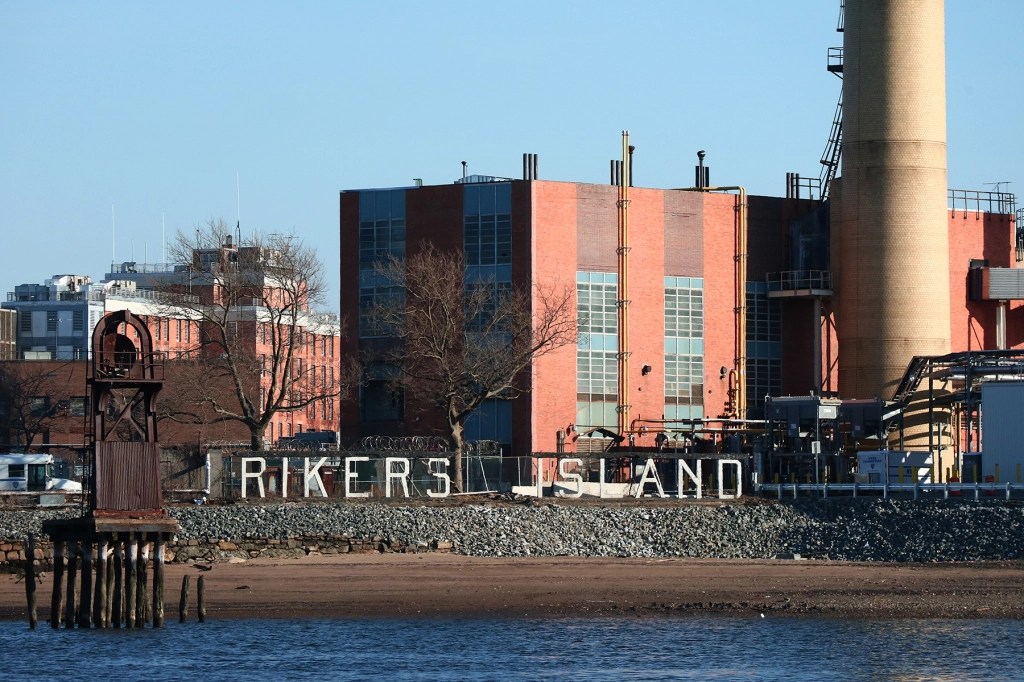
In what way does violence become appropriate or unleash itself? Take for example a community like a prison that may not be adequately run. We find prisoners will act out, rebel, protest, and riot (all words that mean similar things) to the injustices they feel, and the harsh conditions they experience. It is essentially an enhanced mirror-image of their environment (the prison), or a hyper-feedback loop to become the worst human being possible. That is why many prisoners, whether guilty or not, come out of prison or jail worse off than when they were first locked in. It is like a rat stuck in a cage for many years and lashing out at any chance they get to avenge their negative conditioning. In other words, they are acting out what they see and are trained inside this system. A great example of this is Rikers Island, New York, a jail that is literally a hell hole where people are detained waiting for their trial, and experiencing the worst of the worst inside there.
Gangs or mafiosos are usually synonymous with violence. Although at the beginning of their inception, they did not intend for it to get out of hand with senseless violence because it was for protecting their kin. If a revolutionary person is sent to prison, they will be treated as a hero by everyone like gang members because they stand for courage, and integrity, fighting against oppression or abuses of power. They admire those who stand up against the most powerful gang in the world, the State. Revolutionaries stand for the most admired value, and the natural inclination of man, freedom.
“A man who stands for nothing will fall for anything.”
Malcolm X.
The government recognizes that people give them their power. People can lose faith, or belief in their government, and once the social contract is breached, that is when all hell breaks loose. Society is run on ideas and the belief that these ideas keep everything running and stable. People’s beliefs on these ideas keep the State intact, as the Russian-American anarchist Alexander Berkman would say. When things are not running smoothly, and the people feel unsure, or insecure about their own safety and self-being, they become fearful and will lash out at the system, institutions, and government. They will criticize these held beliefs and ideologies whether it is religion or an economic system like Capitalism. The funny thing about these organized ideologies like religion, which may preach liberation and salvation, or capitalism which argues as the best economic freedom, is that they are not as free as they say. In other words, how can systems be free or liberating if it is organized?
What I am imagining is a person putting themselves in a huge box, and proclaiming “I am free!” It is a paradox, contradiction, and hypocrisy. The Enlightenment period wrestled with these questions of the validity of the State’s authority over the individual, philosophers like John Locke tackled it with the scientific spirit from the wave and momentum of the scientific revolution prior. “Man is born free and everywhere he is in chains,” said Jean-Jacques Rousseau. American political theory is the reconciliation, or the thesis-antithesis-synthesis (Hegel), between the Enlightenment and anti-enlightenment arguments. To sum it up, I think of politics in this way, balancing individual freedom with the collective good, or sacrificing one’s self-interest for social harmony.
 Social Scholarly