
“Wall Street Journal reporter Scott Patterson explains how math geniuses developed a new approach to financial trading . . . and almost brought Wall Street down while making themselves wildly wealthy.”
Recently, there’s been a lot of news mostly focused on retail investors, cryptocurrencies, NFTs, meme stocks, etc, or basically how crazy the market has been. But there’s hardly any news about the large funds and market makers who I’d argue are far more dangerous to the system, especially being able to borrow an excessive amount of money, aka being leveraged to the gills (highly risky). People should learn about how the system works and that starts with understanding Wall Street and the main players involved.
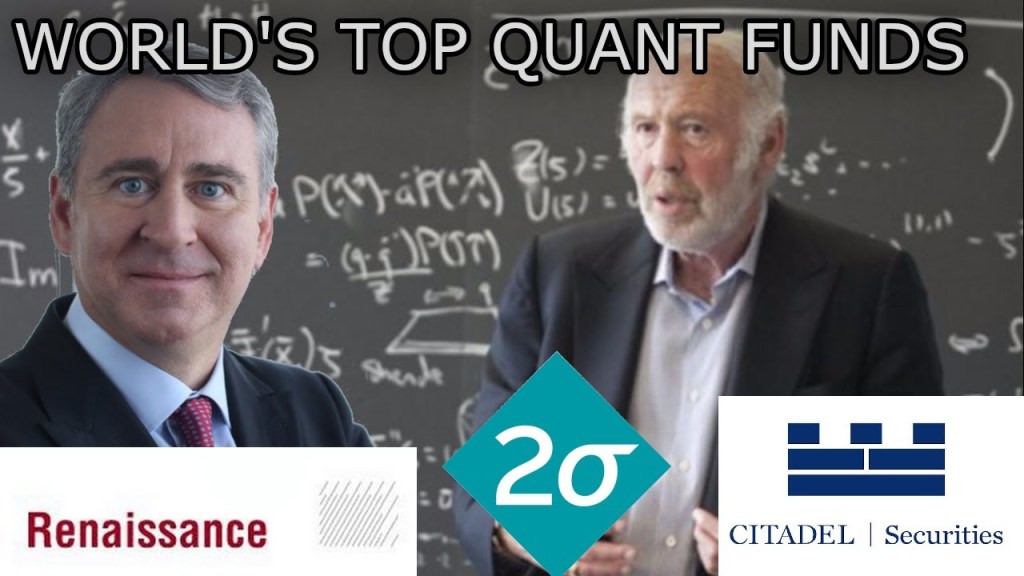
Quants (specialists in quantitative financial analysis) are like super nerds who cracked the market. They changed the game since the days of old traditional investors of the likes of Warren Buffett or Peter Lynch. An example of a quant would be Jim Simons, a beacon of genius whose mathematics contributed to string theory, seriously, in the field of Physics in String Theory! Simons runs a successful firm called Renaissance Technologies using powerful trading algorithms to generate tremendous profits for beating the market year after year. Others include the supervillain Kenneth Griffin who runs one of the largest firms called Citadel Securities. Griffin has essentially positioned himself as a market-maker (providing the necessary liquidity) and he also runs a huge hedge fund. Griffin became the house and an active player on the casino table. Not to mention being one of the market makers paying Robinhood, and behind the controversial Robinhood’s profit–*ahem, I mean payment for-order-flow (PFOF) that routes many of the orders of retail investors. Did you know PFOF was invented by the biggest Ponzi scheme artist Bernie Madoff? Well, actually, he endorsed PFOF and was a pioneer of computer orders with that system.
Robinhood’s mission is to democratize finance for all. Soon after their success of drawing in millions of users, many other brokerages and new FinTechs followed their business model of free-commission trading. Although, like in anything, if recent events have taught us anything (i.e. Facebook’s data controversies), if the product you are using is free, you have to wonder if it is really free? Wasn’t it Milton Friedman who said, “There’s no such thing as a free lunch.” You’ll find that the service isn’t free because the person using it becomes the product. The users are the product being packaged and sold. Your information, your daily interactions whether on social media, or day trading, and anything that is useful and can be exploited or manipulated by the same companies or who they sell or give the data. Should we trust market makers who are active player-participants, who are 1). giving out the cards (creating derivatives like options) 2). able to see everyone’s cards [profiting from the bid/sell spread with PFOF], 3). while simultaneously playing against everyone else on the table [active hedge funds]? Also, what is up with dark pools where retail orders are going in there in huge chunks rather than directly into the lit exchanges? Nothing sketchy about them huh?
Not all quants are created equal. For example, Harry Markopolos was an honest quant, an accountant, etc. who very clearly understood Bernie Madoff’s Ponzi scheme back in the early 2000s. When asked how he figured it out Markopolos said, “It took me five minutes to know that it was a fraud. It took me another almost four hours of mathematical modeling to prove that it was a fraud.” He could prove with simple math Madoff was a fraud, yet, being a key whistleblower in the case he presented with evidence for years, it wasn’t enough for the SEC and other regulatory agencies to crack down on. One has to wonder why didn’t anyone do anything to stop Madoff? It took a financial crisis for the Madoff scheme to end when he turned himself in only because his wealthy clients withdrew their money and thus he was drained of cash to continue his crime.
A few slimy people do end up at Wall Street firms, such as the infamous Jeffrey Epstein who started at Bearn Stearns and began his own hedge fund with only billionaire clients. Epstein was a smart man able to have a discourse on theoretical physics with Harvard or MIT geniuses. In other words, Epstein was an elite who infiltrated various powerful circles in politics, business, and the upper echelon of academic intellectualism. Guys like Epstein or Madoff can lay low and go unpunished for years until the men/women in blue windbreakers get a whiff of them. Then again, a questionable suicide was the easy way out for Epstein, unlike Madoff who served his time and died in prison.
Machine learning, advanced computer algorithms, and data mining have completely changed the virtual landscape of social media and mobile applications like FinTechs drawing in new investors. Hardly anyone ever questions behind the scenes, or sees any conflict of interest, or cites ethical concerns. Nothing good can come out when white-collar crime runs rampant in the largest corporation in the world, the USA.
 Social Scholarly